
DbcultAccessing Vault...
Director's Spotlight
Senior Film Conservator
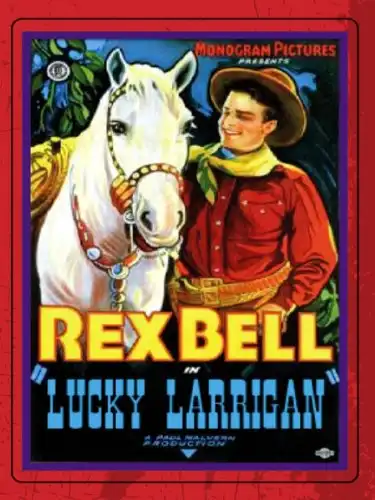
Director's Spotlight: United States
A Deep Dive into the 1932 Vision of John P. McCarthy
As a cultural artifact of the 1932s, Lucky Larrigan provides the visionary mind of its creator, John P. McCarthy. With its avant-garde structure and atmospheric tension, it redefined what audiences could expect from a Western experience.
In Lucky Larrigan, John P. McCarthy pushes the boundaries of conventional narrative. The film's unique approach to its subject matter has sparked endless debates and interpretations among cinephiles and critics alike.
To fully appreciate Lucky Larrigan, one must consider the cinematic climate of 1932. During this period, United States was undergoing significant artistic shifts, and John P. McCarthy was at the forefront of this Western movement, often challenging established norms.
| Cinematography | Handheld |
| Soundtrack | Synth-Heavy |
| Editing | Rhythmic |
| Art Direction | Naturalist |
Visualizing the convergence of John P. McCarthy's style and the core Western narrative.
Typical of the Trem Carr-produced Monogram westerns starring Rex Bell, this one opens in the East with Craig Larrigan as a polo-playing playboy who has no use for the West nor the western way of life. Rancher Jess Bailey, accompanied by his daughter Virginia, comes east to get his eastern-business partner John Larrigan to advance him more money to keep their rustler-plagued ranch afloat, and Craig and Virginia strike up a romance, which is going nowhere fast because of his elitist attitude. The contrived motivation to get the Bell character out west makes less sense than usual, and the incidents that follow carry no logic either.
Decades after its release, Lucky Larrigan remains a vital piece of the cinematic puzzle. Its influence can be seen in countless modern works, solidifying John P. McCarthy's status as a master of the craft in United States and beyond.