
DbcultAccessing Vault...
Director's Spotlight
Senior Film Conservator
Director's Spotlight: United States
A Deep Dive into the 1925 Vision of John P. McCarthy
The enduring fascination with Pals is a testament to the artistic risks taken by John P. McCarthy that eventually paid off. Challenging the viewer to find meaning in the Comedy shadows, it reminds us of the fragility and beauty of the 1925s.
In Pals, John P. McCarthy pushes the boundaries of conventional narrative. The film's unique approach to its subject matter has sparked endless debates and interpretations among cinephiles and critics alike.
| Cinematography | High-Contrast |
| Soundtrack | Synth-Heavy |
| Editing | Disjunctive |
| Art Direction | Baroque |
Visualizing the convergence of John P. McCarthy's style and the core Comedy narrative.
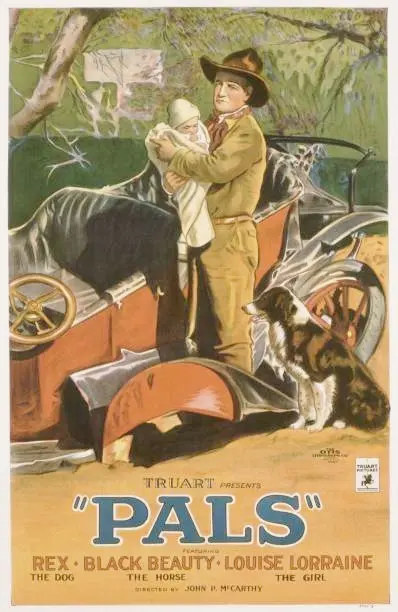
Bruce Taylor arrives in the mountain town of Caliente with his dog (Rex), horse (Blackie), and an abandoned baby found by Rex in an automobile in the desert. The town has no foundling home, and Bruce is forced to care for the infant himself. Molly Markham offers to help and arouses the jealousy of her "suitor," Obediah Dillwater, who has Molly's grandfather under financial obligation. Obediah conspires to have Bruce arrested for kidnapping the baby, but Bruce escapes from jail with the aid of Rex and Blackie. He brings back the sheriff to prove his innocence and rescues Molly from a forced marriage to Obediah. Molly, Bruce, the baby, and Blackie and Rex, the "pals," all look forward to a happy life together.
Decades after its release, Pals remains a vital piece of the cinematic puzzle. Its influence can be seen in countless modern works, solidifying John P. McCarthy's status as a master of the craft in United States and beyond.