
DbcultAccessing Vault...
Director's Spotlight
Senior Film Conservator
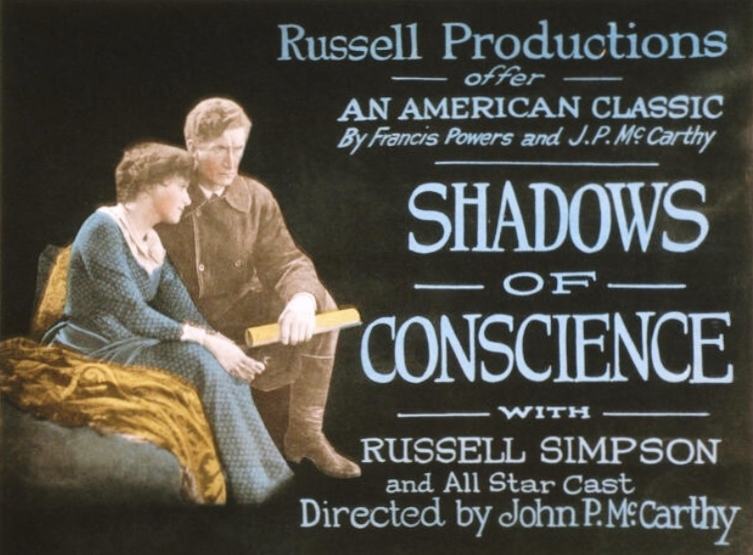
Director's Spotlight: United States
A Deep Dive into the 1921 Vision of John P. McCarthy
The artistic breakthrough represented by Shadows of Conscience in 1921 highlights the uncompromising vision of John P. McCarthy that defines this Western masterpiece. In the context of United States's rich cinematic history, it captures a specific kind of cinematic magic that is rarely replicated.
In Shadows of Conscience, John P. McCarthy pushes the boundaries of conventional narrative. The film's unique approach to its subject matter has sparked endless debates and interpretations among cinephiles and critics alike.
To fully appreciate Shadows of Conscience, one must consider the cinematic climate of 1921. During this period, United States was undergoing significant artistic shifts, and John P. McCarthy was at the forefront of this Western movement, often challenging established norms.
| Cinematography | Noir-Inspired |
| Soundtrack | Synth-Heavy |
| Editing | Disjunctive |
| Art Direction | Baroque |
Visualizing the convergence of John P. McCarthy's style and the core Western narrative.
In 1882, Jim Logan arrives in a small town in Wyoming to inquire about his sister Alice, whose husband, Wade Curry, a dishonest mine speculator, has deserted her. Logan finds Alice fatally ill in a cabin and learns that her marriage was fraudulent. When Curry arrives at the cabin, a fight with Logan ensues, and Curry shoots Alice dead. He hurries to the local saloon and blames her murder on Logan. Finding it impossible to convict Curry of his crimes, Logan goes to the Southwest with Winnie, the daughter of Curry's late partner whom Curry had arranged to be killed. Ten years later, Logan is a successful rancher and Winnie has returned home from a convent school. By coincidence, Curry arrives in town, discovers the girl's identity, and conspires with a lawyer to get possession of Winnie and have Logan charged with murder. However, Logan appeals to an assembly of citizens, and after hearing the whole tale, the judge acquits him. Curry, conscience-stricken, is arrested.
Decades after its release, Shadows of Conscience remains a vital piece of the cinematic puzzle. Its influence can be seen in countless modern works, solidifying John P. McCarthy's status as a master of the craft in United States and beyond.