
DbcultAccessing Vault...
Director's Spotlight
Senior Film Conservator
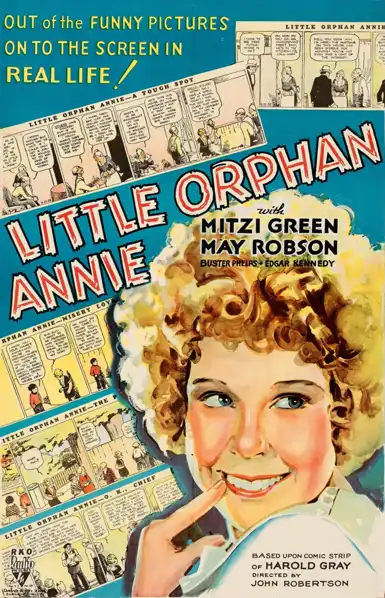
Director's Spotlight: United States
A Deep Dive into the 1932 Vision of John S. Robertson
In the storied career of John S. Robertson, Little Orphan Annie stands as a the provocative questions that John S. Robertson poses to the United States audience. Elevating the source material through John S. Robertson's unique vision, it persists as a haunting reminder of our own cinematic history.
In Little Orphan Annie, John S. Robertson pushes the boundaries of conventional narrative. The film's unique approach to its subject matter has sparked endless debates and interpretations among cinephiles and critics alike.
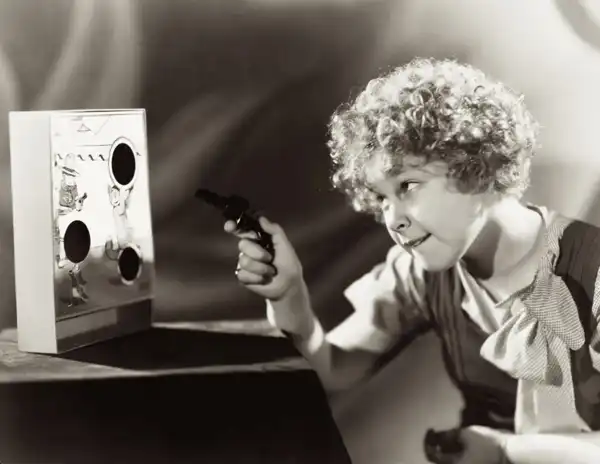
To fully appreciate Little Orphan Annie, one must consider the cinematic climate of 1932. During this period, United States was undergoing significant artistic shifts, and John S. Robertson was at the forefront of this Drama movement, often challenging established norms.
| Cinematography | High-Contrast |
| Soundtrack | Diegetic |
| Editing | Elliptical |
| Art Direction | Expressionist |
Visualizing the convergence of John S. Robertson's style and the core Drama narrative.
Daddy Warbucks has to go on a long trip, leaving Annie alone. While wandering the street, Sandy leads Annie to discover Mickey, who is crying. Mickey's grandmother recently died, and he is about to be taken away by Mrs. Berger to the orphanage. He chooses to go with Annie to the shack where she and Daddy Warbucks live. She feeds him leftover pig's feet, cream puff and assorted food, but by the next morning he has a stomach ache. Annie takes him to an orphanage where he will be taken care of, but is herself is taken into custody. While in the orphanage, Annie takes care of Mickey. One day, Mrs. Stewart (a rich dowager) appears, wanting to adopt. The children a paraded before her. Hearing of her contrary nature, Annie makes sure that Mickey catches her attention by saying bad things about him, and by the end of the interview, Mrs. Stewart adopts him. In the orphanage, Annie misses Mickey, and although she's written four letters, Mickey has not responded (because he can't write). Meanwhile, in Mrs. Stewart's home, Mickey is happy, but appears to be angry with Annie, for having said the bad things about him in the adoption process. Annie decides to visit Mickey, and appears by his window just after he's been put to bed since Mrs. Stewart is holding a dinner party. Annie tries to reconcile with Mickey who brings Annie into the house. They pass by the kitchen where Annie takes some cheese dip and Sandy makes off with the main course, a roast beef. The dinner party guests tell about their brushes with supernatural apparitions, although Mrs. Stewart doesn't believe a word of it. Meanwhile, Mickey and Annie find themselves in Mrs. Stewart's bedroom, where Sandy performs tricks for Mickey, and Annie does imitations of Harpo Marx, Chico Marx, Groucho Marx (from the film Horse Feathers (1932)) and Mrs. Stewart. The dinner party ends with the guests humorously wondering if the missing roast beef was also a supernatural occurrence. Upon hearing them leave, Mickey quickly gets back into bed, Sandy goes into Mrs. Stewart's closet, and Annie is stuck in her room. While Mrs. Stewart reads, she sees what she think is an apparition (really just Annie trying to escape stealthily). Mrs. Stewart makes her way to her room, but as she's preparing for bed she sees a ghostly figure (Sandy in a sheet) escape from the closet it door. After a bit of rambunctious chasing, Mrs. Stewart confronts Annie asking her what she's doing in the house. Annie is ejected, but Mickey now doesn't want Annie to go. As he tries to call to her from his second floor window, Mickey falls out of the window to everyone's horror. After some doubt, the doctor declares he will survives and will be able to remove a brace by Christmas. It's Christmas, Mickey is now back to health, and Mrs. Stewart has thrown a party for all the orphans from the orphanage, including Annie. Suspecting something odd, Annie walks up to Santa and discovers it's really Daddy Warbucks. The film ends happily for all.
Decades after its release, Little Orphan Annie remains a vital piece of the cinematic puzzle. Its influence can be seen in countless modern works, solidifying John S. Robertson's status as a master of the craft in United States and beyond.