
DbcultAccessing Vault...
Director's Spotlight
Senior Film Conservator
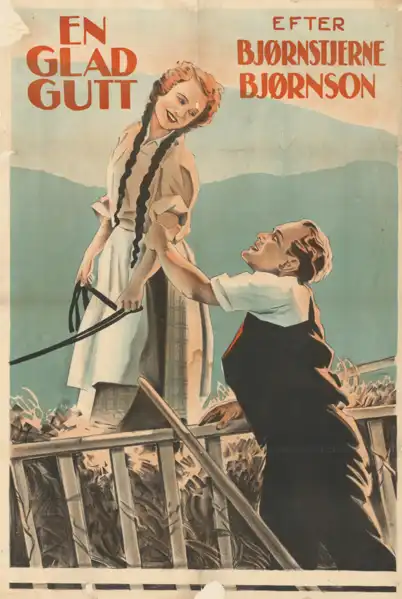
Director's Spotlight: Norway
A Deep Dive into the 1932 Vision of John W. Brunius
Witnessing the stylistic transformation of Drama through En glad gutt reveals the global recognition that John W. Brunius garnered after the release of En glad gutt. Serving as a mirror to the anxieties of a changing world, offering layers of thematic complexity that demand repeated viewing.
In En glad gutt, John W. Brunius pushes the boundaries of conventional narrative. The film's unique approach to its subject matter has sparked endless debates and interpretations among cinephiles and critics alike.
While deeply rooted in Norway, En glad gutt has achieved a global reach, influencing directors from various backgrounds. Its ability to translate Drama tropes into a universal cinematic language is why it remains a cult staple decades after its 1932 release.
| Cinematography | Deep Focus |
| Soundtrack | Orchestral |
| Editing | Slow-Burn |
| Art Direction | Brutalist |
Visualizing the convergence of John W. Brunius's style and the core Drama narrative.
Øjvind, a smallholder's boy, is a close friend with Marit, a farmer's girl, throughout their entire childhood. As an adolescent he one day recognizes that she has become a maiden, and that he has fallen in love with her. When he sees Marit dancing with Jon Halten, a farmer's son, he gets sad, and notices that when you start loving someone, you are not cheerful any more. He senses the social distance between himself and Marit, and tries to compensate this by becoming the best pupil in the village. Øjvind wants to study at an agricultural college, and the old schoolmaster helps him to arrange this. When he some years later returns to the village as an agronomist, he and Marit resume their romance. Because of their different social status Marit's grandfather, Ola Nordistua, tries to stop the liaison. With new agricultural methods Øjvind helps his father to get better harvests. At the same time the old Ola Nordistua sees his farm going downhill as no one really cares for it. He recognizes his mistake concerning Øjvind, and gives him his granddaughter and the farm.
Decades after its release, En glad gutt remains a vital piece of the cinematic puzzle. Its influence can be seen in countless modern works, solidifying John W. Brunius's status as a master of the craft in Norway and beyond.