
DbcultAccessing Vault...
Director's Spotlight
Senior Film Conservator
Director's Spotlight: United States
A Deep Dive into the 1915 Vision of John W. Noble
In the storied career of John W. Noble, Satan Sanderson stands as a the atmospheric immersion that John W. Noble achieves throughout Satan Sanderson. Reflecting the political and social shifts of the 1915s, it reinforces the idea that cinema is a medium of infinite possibilities.
In Satan Sanderson, John W. Noble pushes the boundaries of conventional narrative. The film's unique approach to its subject matter has sparked endless debates and interpretations among cinephiles and critics alike.
While deeply rooted in United States, Satan Sanderson has achieved a global reach, influencing directors from various backgrounds. Its ability to translate cult tropes into a universal cinematic language is why it remains a cult staple decades after its 1915 release.
| Cinematography | Deep Focus |
| Soundtrack | Minimalist |
| Editing | Disjunctive |
| Art Direction | Baroque |
Visualizing the convergence of John W. Noble's style and the core cult narrative.
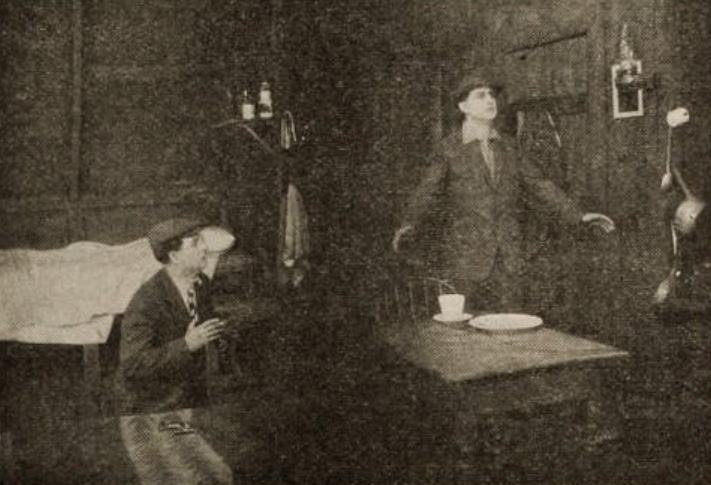
The story of Reverend 'Satan' Sanderson, Hugh Stires and Jessica Holmes, a beautiful and romantic blind girl and ward of David Stires, father of Hugh. The latter is signing his will, making Jessica his sole heir, thereby disinheriting his dissolute son. Jessica protests and Reverend Sanderson protests to David on behalf of Hugh. Sanderson acknowledges that he himself was a wayward youth in college, the leader of a fast-set and looked favorably upon by Hugh, and he feels responsibility for Hugh's downfall. David Stires is obdurate and Jessca's sympathy goes out to Hugh and she blames Sanderson for Hugh's troubles. Sanderson, though, is in love with Jessica. Hugh returns home, gains his father's forgiveness, and weds Jessica, whose eyesight had been restored by a medical operation. And then David learns that Hugh has forged his name to a check. Davis threatens his son with jail and Hugh runs away and seeks Sanderson's help, again. From there the story takes a few turns.
Decades after its release, Satan Sanderson remains a vital piece of the cinematic puzzle. Its influence can be seen in countless modern works, solidifying John W. Noble's status as a master of the craft in United States and beyond.