
DbcultAccessing Vault...
Director's Spotlight
Senior Film Conservator
Director's Spotlight: United States
A Deep Dive into the 1920 Vision of John W. Noble
The evocative power of The Song of the Soul stems from the unique collaboration between the subversive storytelling techniques employed by John W. Noble in 1920. Synthesizing the best elements of United States and international cinema, it reminds us of the fragility and beauty of the 1920s.
In The Song of the Soul, John W. Noble pushes the boundaries of conventional narrative. The film's unique approach to its subject matter has sparked endless debates and interpretations among cinephiles and critics alike.
While deeply rooted in United States, The Song of the Soul has achieved a global reach, influencing directors from various backgrounds. Its ability to translate Drama tropes into a universal cinematic language is why it remains a cult staple decades after its 1920 release.
| Cinematography | Noir-Inspired |
| Soundtrack | Experimental |
| Editing | Elliptical |
| Art Direction | Expressionist |
Visualizing the convergence of John W. Noble's style and the core Drama narrative.
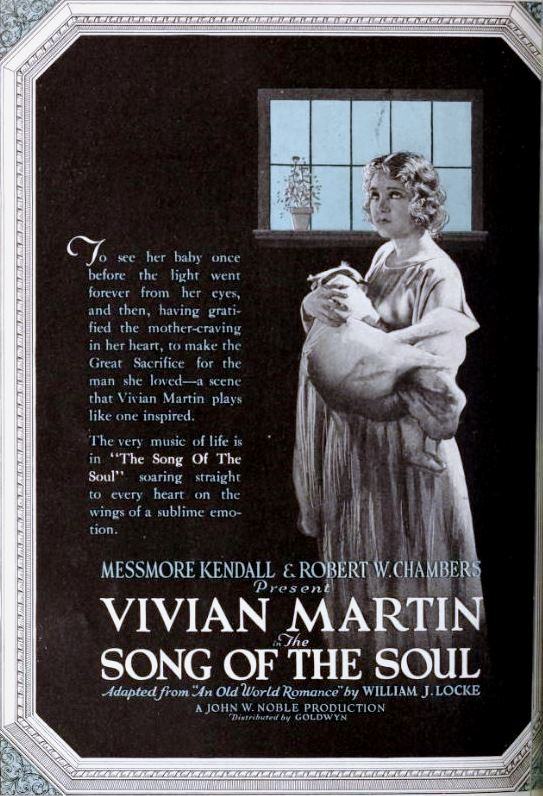
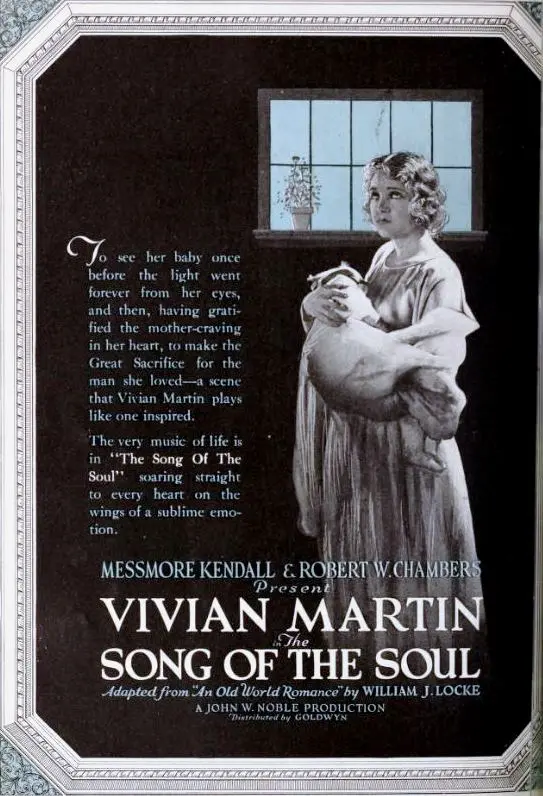
Jerry Wendover, disfigured since childhood after his act of heroism in saving a little girl from a fire scarred his face, secludes himself in an old house in the Backwater district of Florida. One night he finds Barbara Seaforth, a young blind girl, lost in the swamps and takes her home. The two unfortunates fall in love, marry, and have a child. One day, a visiting doctor tells Jerry that Barbara's sight can be restored. The operation is performed successfully, but the doctor warns his patient to shield her eyes from the light or risk reversal of the surgery. Barbara, realizing her husband's dread of exposing his disfigurement to her, looks at her child and then permanently blinds herself by staring into the light, thus sacrificing her sight for the love of her husband.
Decades after its release, The Song of the Soul remains a vital piece of the cinematic puzzle. Its influence can be seen in countless modern works, solidifying John W. Noble's status as a master of the craft in United States and beyond.