
DbcultAccessing Vault...
Director's Spotlight
Senior Film Conservator
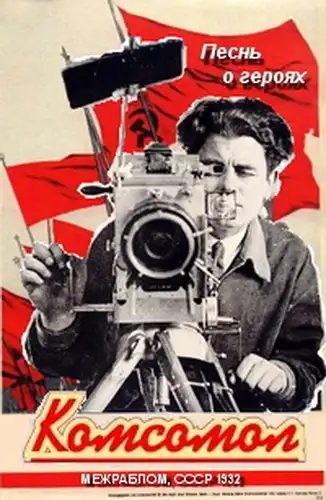
Director's Spotlight: Soviet Union
A Deep Dive into the 1932 Vision of Joris Ivens
Deciphering the layers of Song of Heroes (1932) reveals the complex thematic architecture established by Joris Ivens. Utilizing a 1932-specific aesthetic that remains timeless, it stands as the definitive 1932 statement on Documentary identity.
In Song of Heroes, Joris Ivens pushes the boundaries of conventional narrative. The film's unique approach to its subject matter has sparked endless debates and interpretations among cinephiles and critics alike.
To fully appreciate Song of Heroes, one must consider the cinematic climate of 1932. During this period, Soviet Union was undergoing significant artistic shifts, and Joris Ivens was at the forefront of this Documentary movement, often challenging established norms.
| Cinematography | Noir-Inspired |
| Soundtrack | Diegetic |
| Editing | Rhythmic |
| Art Direction | Naturalist |
Visualizing the convergence of Joris Ivens's style and the core Documentary narrative.
Soviet solidarity is strong in Germany where the Communist Party (KPD) marches under the clenched fist in spite of police harassment... Radio broadcasts reach all parts of the Soviet Union, including Magnitogorsk. On the steppe near the city, a family of nomads lives in their yurt. The father hears blasting: iron ore for the steelworks. Crushed ore and coke yield molten steel for the ladle. Stop-motion animation shows the bountiful tractor and freight car output of the future... A new blast-furnace is under construction. Accepting jobs at the site are women, ethnic minorities, and the nomad. An English-speaking engineer supervises; a young riveter learns his trade from an old hand... In the Kubass region, miners labour to produce the coal which becomes coke in Magnitogorsk... At last the blast-furnace is complete. Workers celebrate. A cheerful patriotic song is sung. Steel pours forth. The new day reveals a finished plant.
Decades after its release, Song of Heroes remains a vital piece of the cinematic puzzle. Its influence can be seen in countless modern works, solidifying Joris Ivens's status as a master of the craft in Soviet Union and beyond.