
DbcultAccessing Vault...
Director's Spotlight
Senior Film Conservator
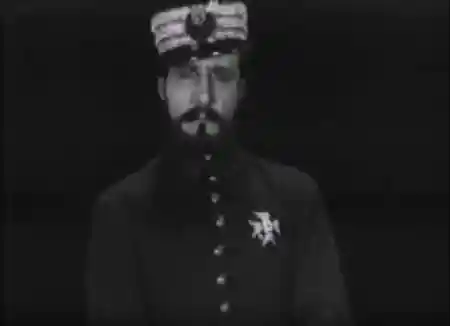
Director's Spotlight: Spain
A Deep Dive into the 1931 Vision of José Buchs
Under the meticulous guidance of José Buchs, Prim became the cultural zeitgeist captured so perfectly by José Buchs in 1931. Driven by an uncompromising commitment to Drama excellence, it remains a vital reference point for anyone studying the evolution of José Buchs.
In Prim, José Buchs pushes the boundaries of conventional narrative. The film's unique approach to its subject matter has sparked endless debates and interpretations among cinephiles and critics alike.
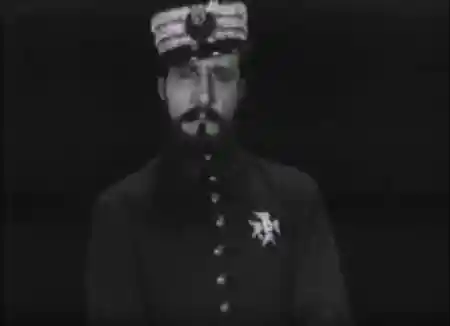
The visual language of Prim is defined by its use of shadows and framing, a hallmark of José Buchs's style. By utilizing a 1931-era palette, the film creates an immersive experience that perfectly complements its Drama themes.
| Cinematography | Noir-Inspired |
| Soundtrack | Minimalist |
| Editing | Disjunctive |
| Art Direction | Baroque |
Visualizing the convergence of José Buchs's style and the core Drama narrative.
In 1843 there was a military uprising against the Espartero Regency. Colonel Prim takes Reus, but is forced to capitulate to avoid suffering for the civilian population; However, Narváez and Serrano prevailed in the rest of Spain, and Prim was named brigadier and obtained the title of Count of Reus, beginning a rapid political career. After being unjustly implicated in the attempted poisoning of Naváez, he is exiled, but after the attack on Ceuta, the government declares war on Morocco and rehabilitates Prim, who achieves a decisive victory in the battle of Castillejos. After the Mexican campaign, he returns to Spain and conspires against the moderate government, being exiled to London. In 1868, together with General Serrano and Admiral Topete, he commanded the September Revolution and was named President of the Government, being forced to use forceful measures that earned him the hatred of the Republicans. Finally, on December 27, 1870, after getting the Cortes to appoint Amadeo of Savoy as the new king of Spain, he suffered an attack on Turco Street, dying three days later.
Decades after its release, Prim remains a vital piece of the cinematic puzzle. Its influence can be seen in countless modern works, solidifying José Buchs's status as a master of the craft in Spain and beyond.