
DbcultAccessing Vault...
Director's Spotlight
Senior Film Conservator
Director's Spotlight: United States
A Deep Dive into the 1915 Vision of Joseph De Grasse
In the storied career of Joseph De Grasse, Father and the Boys stands as a the provocative questions that Joseph De Grasse poses to the United States audience. Elevating the source material through Joseph De Grasse's unique vision, it persists as a haunting reminder of our own cinematic history.
In Father and the Boys, Joseph De Grasse pushes the boundaries of conventional narrative. The film's unique approach to its subject matter has sparked endless debates and interpretations among cinephiles and critics alike.
In this work, Joseph De Grasse explores the intersection of cult and United States cultural identity. The meticulous attention to detail suggests a deep-seated commitment to pushing the boundaries of the medium, ensuring that Father and the Boys remains a relevant topic of study for cult enthusiasts.
| Cinematography | Noir-Inspired |
| Soundtrack | Orchestral |
| Editing | Invisible |
| Art Direction | Kitsch |
Visualizing the convergence of Joseph De Grasse's style and the core cult narrative.
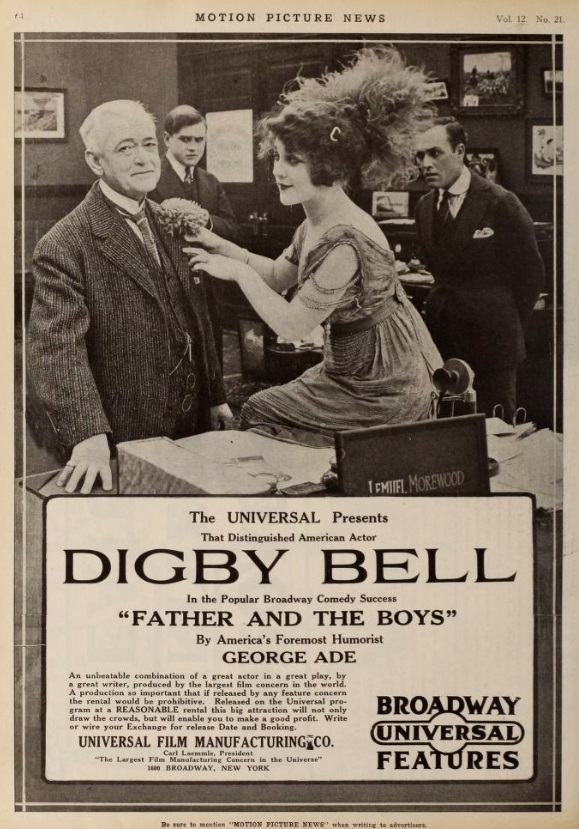
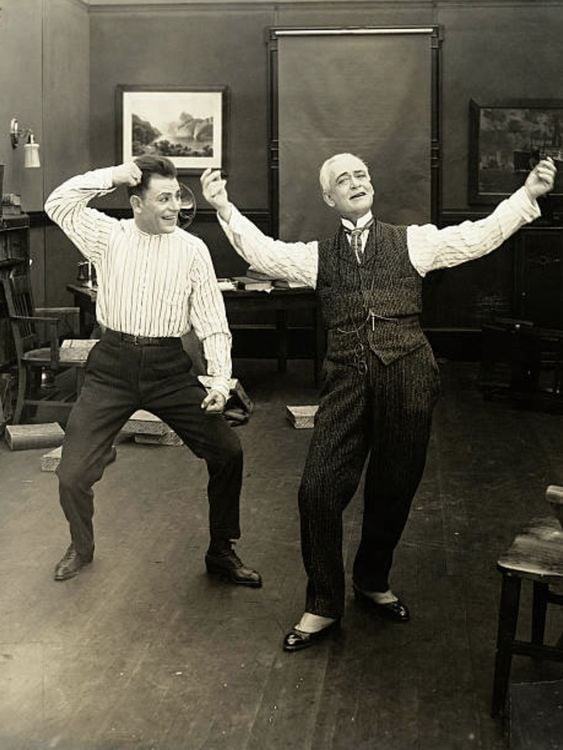
Lemuel Morewood is a wealthy businessman to whom riches bring no pleasure because he has entirely lost the sympathy of his sons, for whom he lives. Billy is society-mad and completely enthralled by Mrs. Bruce Guilford, a leader of the smart set. Tom thinks of nothing but sports; he is an amateur athlete of national prominence. Lemuel longs to see the boys interested in the business. He especially wants Tom to marry Frances Berkeley and Billy to marry Emily Donelson. But the boys will have none of them. Bessie Brayton is a Western orphan who has come to New York and taken up society entertaining for a living. Her only property is a half-interest in the Bluebird mine, which she supposes is worthless. One evening, the Morewoods employ Bessie to entertain at an exclusive dinner they are giving, and here she meets Major Bellamy Didsworth, who offers to sell her half-interest for her. Lemuel has run away from this dinner. But, goaded by Bessie's taunts that he is old-fashioned, he gets into his evening clothes and enters into the gambling that follows. Bessie encourages him and he cleans up on Didsworth, as the others look on, staggered by his plunging. Leaving them dazed, Lemuel makes a spectacular exit with Bessie to "blow his winnings." Lemuel keeps up the pace he has set. He goes to the races and there his conduct is so riotous, and his followers, Bessie and a sporting man, so conspicuous, that Mrs. Bruce Guildford is scandalized. She criticizes Lemuel to his son. Billy defends his father, and the quarrel results in a complete break. Bessie has a telegram from Didsworth saying he can get $1,000 for her stock. Lemuel suspects that Didsworth is planning to rob her and takes the matter into his own hands. He and Bessie go out to Nevada together. Lemuel's sons think he has run away to get married to Bessie, and they follow, with Emily, Frances, and Ford, the family lawyer. Out in Nevada, Lemuel and Bessie find that her half of the Bluebird is worth at least $75,000, and they discover that the other half is owned by Carl Higbee, Bessie's old sweetheart who disappeared in Alaska. On the way to Nevada, Tom becomes engaged to Emily and Billy to Frances, which is exactly contrary to what Lemuel planned. They arrive in time to stop the wedding, as they think, and are mortified to learn that they are all wrong, and that Bessie is to be married to Higbee. Lemuel is delighted that his sons are bringing the girls into the family, although they have shifted partners. Lemuel agrees to go back and help the boys run the business.
Decades after its release, Father and the Boys remains a vital piece of the cinematic puzzle. Its influence can be seen in countless modern works, solidifying Joseph De Grasse's status as a master of the craft in United States and beyond.