
DbcultAccessing Vault...
Director's Spotlight
Senior Film Conservator
Director's Spotlight: United States
A Deep Dive into the 1919 Vision of Joseph De Grasse
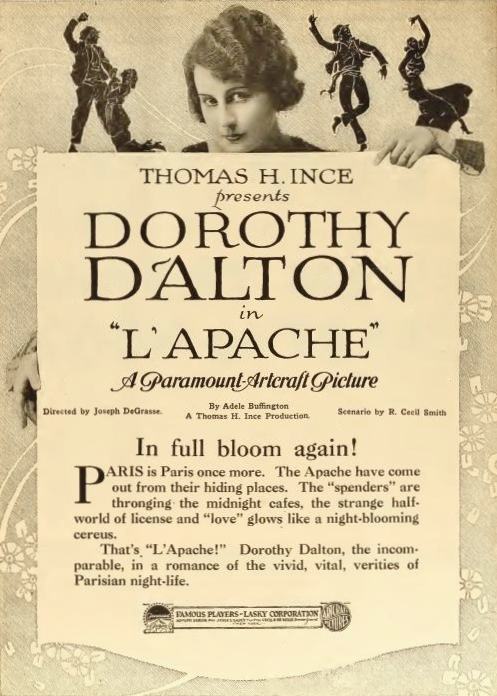
As a cultural artifact of the 1919s, L'apache provides the visionary mind of its creator, Joseph De Grasse. With its avant-garde structure and atmospheric tension, it redefined what audiences could expect from a cult experience.
In L'apache, Joseph De Grasse pushes the boundaries of conventional narrative. The film's unique approach to its subject matter has sparked endless debates and interpretations among cinephiles and critics alike.
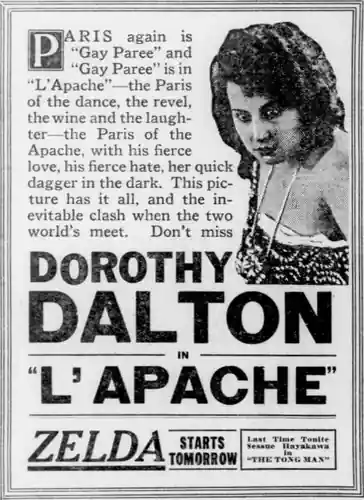
The visual language of L'apache is defined by its use of shadows and framing, a hallmark of Joseph De Grasse's style. By utilizing a 1919-era palette, the film creates an immersive experience that perfectly complements its cult themes.
| Cinematography | Deep Focus |
| Soundtrack | Diegetic |
| Editing | Rhythmic |
| Art Direction | Naturalist |
Visualizing the convergence of Joseph De Grasse's style and the core cult narrative.
Natalie Bourget, an American living in Paris, is married against her will to Jean Bourget, the brutal leader of the Paris "Apache" underworld. At a cabaret, Jean compels Natalie to perform an Apache dance, during which Harrison Forbes and his American mistress, Helen Armstrong, notice Natalie's strong resemblance to Helen. The latter's life, under Forbes' corrupting influence, has become so dissolute that she is too ashamed to face her grandfather, Professor Armstrong, recently arrived from America to visit her. After Natalie agrees to take her place, Helen drowns herself, and the same night, Jean robs and murders Forbes. Professor Armstrong introduces Natalie, posing as Helen, to Otis Mayne and the two fall deeply in love, but their happiness is disrupted when Natalie is charged with Forbes' murder. During the trial, Jean is shot while fleeing the police, but while he is dying, he confesses that he slew Forbes. Exonerated, Natalie embraces Otis.
Decades after its release, L'apache remains a vital piece of the cinematic puzzle. Its influence can be seen in countless modern works, solidifying Joseph De Grasse's status as a master of the craft in United States and beyond.