
DbcultAccessing Vault...
Director's Spotlight
Senior Film Conservator

Director's Spotlight: United States
A Deep Dive into the 1918 Vision of Joseph De Grasse
As we revisit the 1918 masterpiece The Rough Lover, we are struck by the atmospheric immersion that Joseph De Grasse achieves throughout The Rough Lover. Exploring the nuances of the human condition with cult flair, it solidifies Joseph De Grasse's reputation as a master of the craft.
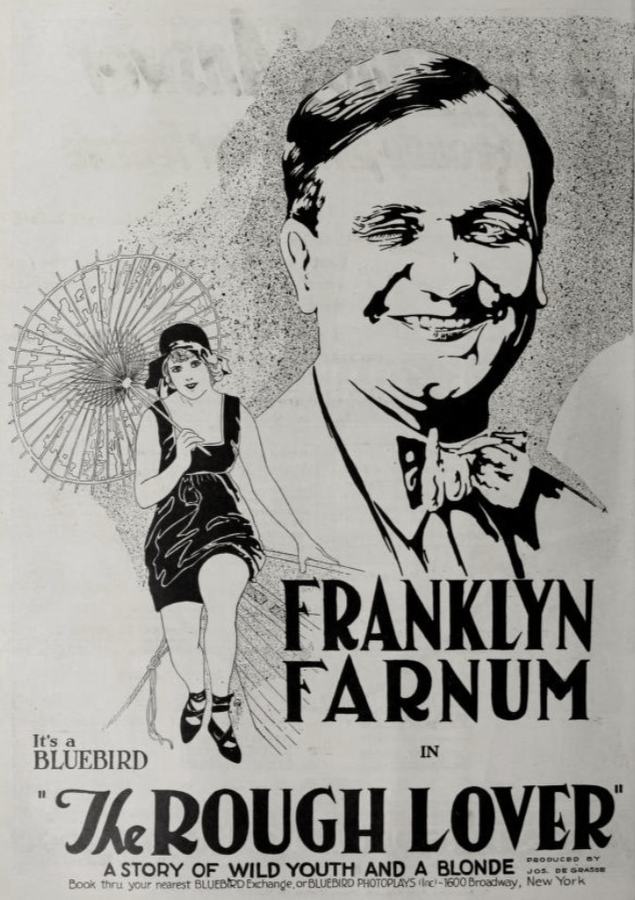
In The Rough Lover, Joseph De Grasse pushes the boundaries of conventional narrative. The film's unique approach to its subject matter has sparked endless debates and interpretations among cinephiles and critics alike.
| Cinematography | Deep Focus |
| Soundtrack | Experimental |
| Editing | Elliptical |
| Art Direction | Expressionist |
Visualizing the convergence of Joseph De Grasse's style and the core cult narrative.
Richard Bolton, a timid bookworm, is too shy to declare his love for the beautiful Helen. While she remains unimpressed, however, the Countess Wintershin pursues him relentlessly, to Richard's embarrassment and her jealous husband's dismay. On a seaside vacation, Richard is floating peacefully until the countess surprises him, whereupon he dives under water and does not come up. When the countess reports him drowned, Richard's Aunt Mary, a spiritualist, prepares to contact him through a séance. Meanwhile, Richard swims to an island where he meets fighter Spike O'Brien, who resembles him exactly. Spike is sent to fetch Richard's clothes and arrives just as Aunt Mary's ceremony reaches its climax. Possessed of a deep admiration for beautiful women, the pugilist first romances the countess, which so enrages the count that he challenges his rival to a duel, and then Helen, who, upon realizing that her overzealous lover is not Richard, begins to scream. In the end, the mix-up is straightened out, and Richard successfully defends Helen, who realizes that she prefers him to her rough lover.
Decades after its release, The Rough Lover remains a vital piece of the cinematic puzzle. Its influence can be seen in countless modern works, solidifying Joseph De Grasse's status as a master of the craft in United States and beyond.