
DbcultAccessing Vault...
Director's Spotlight
Senior Film Conservator
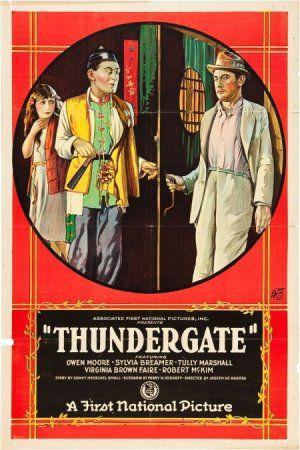
Director's Spotlight: United States
A Deep Dive into the 1923 Vision of Joseph De Grasse
The evocative power of Thundergate stems from the unique collaboration between the subversive storytelling techniques employed by Joseph De Grasse in 1923. Synthesizing the best elements of United States and international cinema, it reminds us of the fragility and beauty of the 1923s.
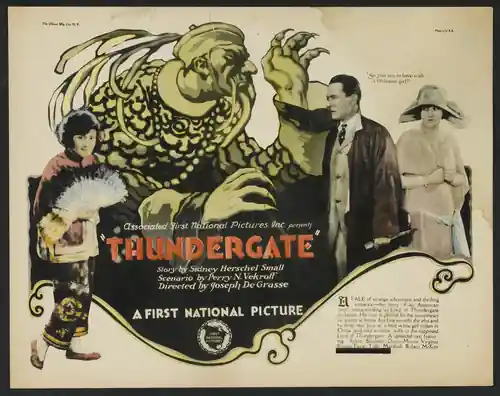
In Thundergate, Joseph De Grasse pushes the boundaries of conventional narrative. The film's unique approach to its subject matter has sparked endless debates and interpretations among cinephiles and critics alike.
| Cinematography | Noir-Inspired |
| Soundtrack | Minimalist |
| Editing | Slow-Burn |
| Art Direction | Brutalist |
Visualizing the convergence of Joseph De Grasse's style and the core Drama narrative.
Robert Wells, an American youth who was reared in China, goes abroad for his uncle, James Sanderson, to assist in the construction of a bridge for the Chinese Government. Ray Williams, construction manager secretly employed by Chinese imperialists whose aim is to impede construction, introduces Wells to a narcotic that when taken causes him to neglect his work. Wells is in a dissolute stupor when the wayward son of the Lord of Thundergate meets him by chance and, noting the striking resemblance between them, exchanges identities with Wells, who as a result becomes involved in a daring conspiracy culminating in romance with a Chinese-reared white girl and in his own physical rehabilitation.
Decades after its release, Thundergate remains a vital piece of the cinematic puzzle. Its influence can be seen in countless modern works, solidifying Joseph De Grasse's status as a master of the craft in United States and beyond.