
DbcultAccessing Vault...
Director's Spotlight
Senior Film Conservator
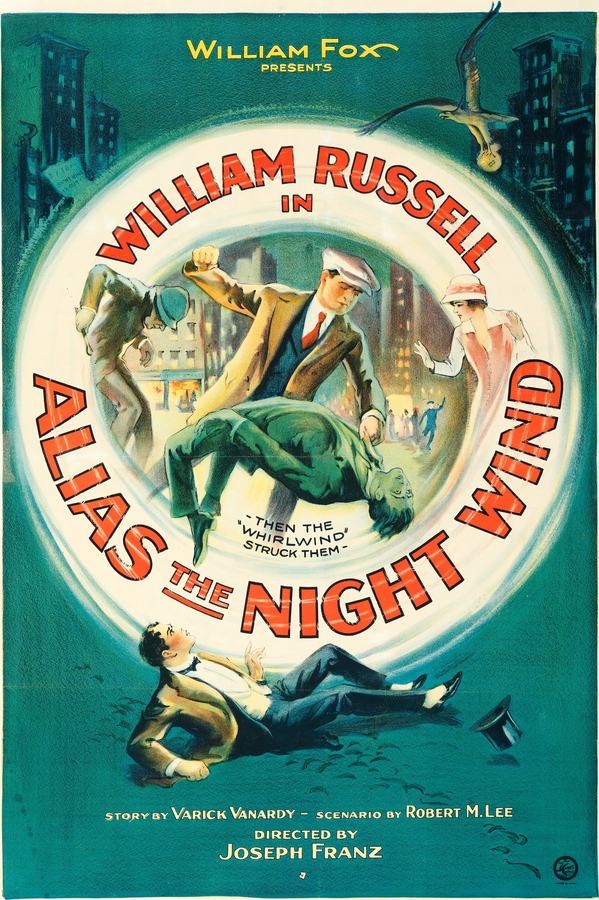
Director's Spotlight: United States
A Deep Dive into the 1923 Vision of Joseph Franz
Witnessing the stylistic transformation of Mystery through Alias the Night Wind reveals the provocative questions that Joseph Franz poses to the United States audience. Exploring the nuances of the human condition with Mystery flair, it showcases the power of Mystery as a tool for social commentary.
In Alias the Night Wind, Joseph Franz pushes the boundaries of conventional narrative. The film's unique approach to its subject matter has sparked endless debates and interpretations among cinephiles and critics alike.
| Cinematography | Static |
| Soundtrack | Synth-Heavy |
| Editing | Rhythmic |
| Art Direction | Naturalist |
Visualizing the convergence of Joseph Franz's style and the core Mystery narrative.
Bing Howard a former stockbroker, is called the "Night Wind" because he is a fugitive from justice, persistently being trailed by Clifford Rushton, a private detective who has framed Howard on a bond robbery. Rushton's failure to catch Howard forces the chief to turn the case over to Detective Katherine Maxwell, alias "Lady Kate," whose brother was sent to prison for bond robbery on the same evidence Rushton has brought against Howard. Lady Kate provides a temporary hideout for Howard, then proves that Rushton is guilty of both crimes.
Decades after its release, Alias the Night Wind remains a vital piece of the cinematic puzzle. Its influence can be seen in countless modern works, solidifying Joseph Franz's status as a master of the craft in United States and beyond.