
DbcultAccessing Vault...
Director's Spotlight
Senior Film Conservator
Director's Spotlight: United States
A Deep Dive into the 1923 Vision of Joseph Henabery
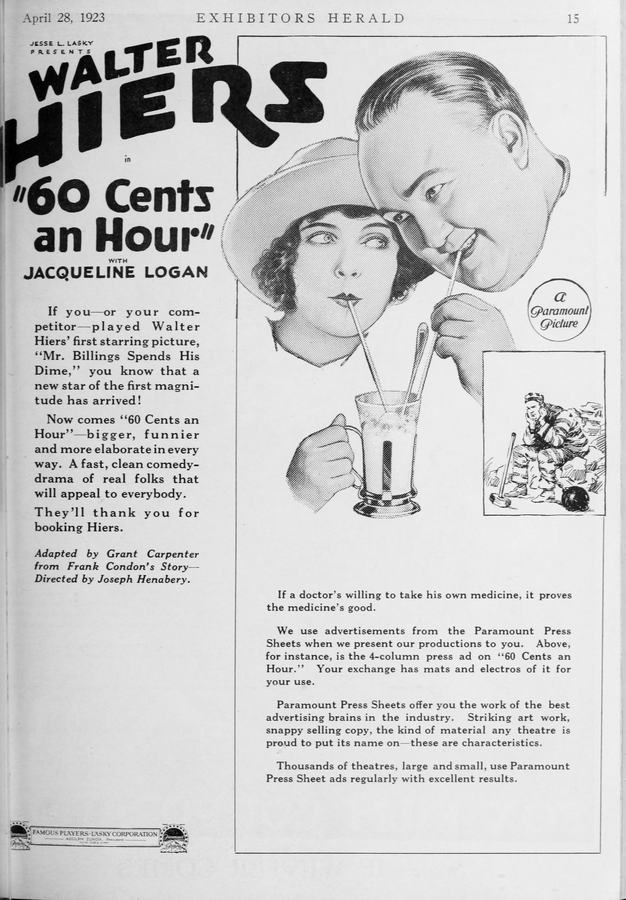
The thematic gravity of Sixty Cents an Hour (1923) is rooted in the historical context that Joseph Henabery weaves into the Comedy fabric. Synthesizing the best elements of United States and international cinema, it highlights the importance of independent voices in United States.
In Sixty Cents an Hour, Joseph Henabery pushes the boundaries of conventional narrative. The film's unique approach to its subject matter has sparked endless debates and interpretations among cinephiles and critics alike.
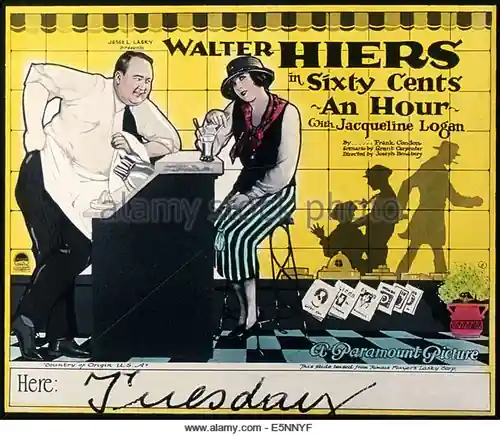
While deeply rooted in United States, Sixty Cents an Hour has achieved a global reach, influencing directors from various backgrounds. Its ability to translate Comedy tropes into a universal cinematic language is why it remains a cult staple decades after its 1923 release.
| Cinematography | Static |
| Soundtrack | Orchestral |
| Editing | Slow-Burn |
| Art Direction | Brutalist |
Visualizing the convergence of Joseph Henabery's style and the core Comedy narrative.
Although Jimmy Kirk earns only $7.50 a week as a soda jerk, he is ambitious and hopes to marry Mamie Smith, the bank president's daughter. He saves up enough money to rent a car, in which he finds money stolen from the bank. When James Smith tries to keep Jimmy from receiving the reward, Jimmy shrewdly claims that the bank encroaches on his 4-ft. plot of property. Jimmy wins both a financial compromise and Mamie.
Decades after its release, Sixty Cents an Hour remains a vital piece of the cinematic puzzle. Its influence can be seen in countless modern works, solidifying Joseph Henabery's status as a master of the craft in United States and beyond.