
DbcultAccessing Vault...
Director's Spotlight
Senior Film Conservator
Director's Spotlight: United States
A Deep Dive into the 1935 Vision of Joseph Henabery
Analyzing Vaudeville (1935) requires a deep dive into the unique directorial voice that Joseph Henabery brought to the screen. By challenging the status quo of 1935 cinema, it continues to spark endless debates among critics and cinephiles alike.
In Vaudeville, Joseph Henabery pushes the boundaries of conventional narrative. The film's unique approach to its subject matter has sparked endless debates and interpretations among cinephiles and critics alike.
In this work, Joseph Henabery explores the intersection of Short and United States cultural identity. The meticulous attention to detail suggests a deep-seated commitment to pushing the boundaries of the medium, ensuring that Vaudeville remains a relevant topic of study for Short enthusiasts.
| Cinematography | High-Contrast |
| Soundtrack | Experimental |
| Editing | Invisible |
| Art Direction | Kitsch |
Visualizing the convergence of Joseph Henabery's style and the core Short narrative.
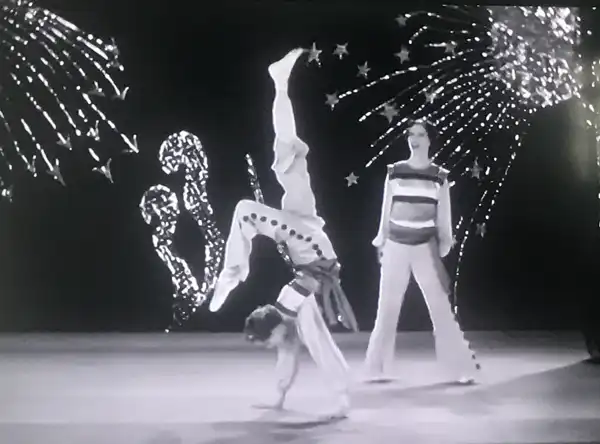
A vaudeville revue is presented. Ray and Sunshine perform a high spirited acrobatic routine, demonstrating both their strength and flexibility. Chaz Chase then performs a comic routine, demonstrating what one can consume besides traditional foods. Next, The Holman Sisters, sitting back-to-back, perform a fast paced two-piano duet, each often playing both pianos at the same time. Finally, the headline act, Al Trahan, tries to raise the sophistication of the show in his piano-vocal duet with a coloratura. It is questionable if he achieves his goal.
Decades after its release, Vaudeville remains a vital piece of the cinematic puzzle. Its influence can be seen in countless modern works, solidifying Joseph Henabery's status as a master of the craft in United States and beyond.