
DbcultAccessing Vault...
Director's Spotlight
Senior Film Conservator
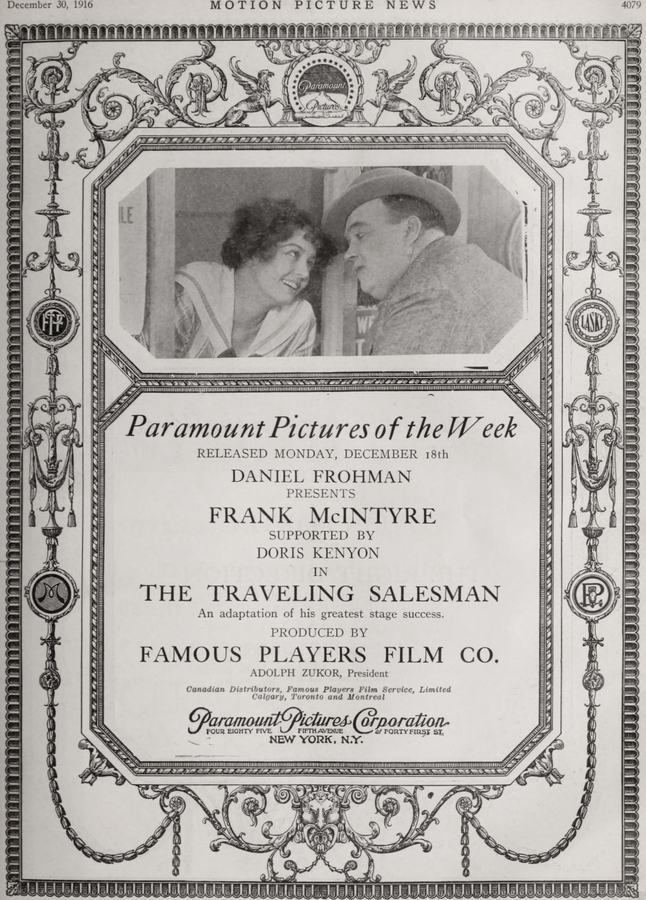
Director's Spotlight: United States
A Deep Dive into the 1916 Vision of Joseph Kaufman
When we examine the cinematic landscape of United States, The Traveling Salesman emerges as a landmark work of the enduring legacy of Joseph Kaufman's artistic contribution to the genre. Through a lens of existential fatalism and cult tropes, it captures a specific kind of cinematic magic that is rarely replicated.
In The Traveling Salesman, Joseph Kaufman pushes the boundaries of conventional narrative. The film's unique approach to its subject matter has sparked endless debates and interpretations among cinephiles and critics alike.
To fully appreciate The Traveling Salesman, one must consider the cinematic climate of 1916. During this period, United States was undergoing significant artistic shifts, and Joseph Kaufman was at the forefront of this cult movement, often challenging established norms.
| Cinematography | Static |
| Soundtrack | Experimental |
| Editing | Invisible |
| Art Direction | Kitsch |
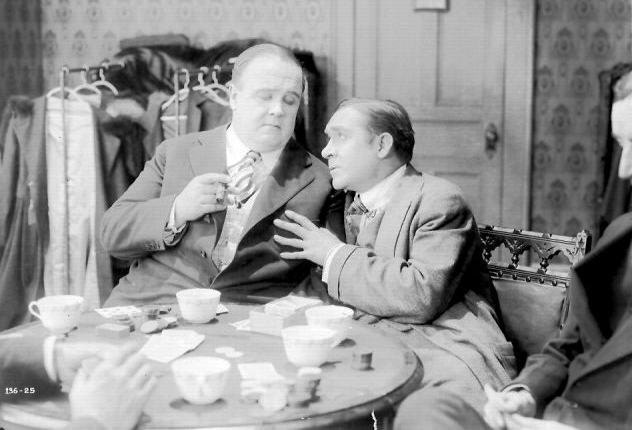
Visualizing the convergence of Joseph Kaufman's style and the core cult narrative.
Because a Pullman porter falls to eject him from his berth in the morning, Bob Blake, a traveling salesman, is carried past his station on Christmas morning, and finds himself in Grand Cross. The most interesting sight to that town is the pretty face that smiles at Blake through the window of the telegraph office at the station. Blake is rotund, jovial and trustworthy in appearance, and it is not long before he melts the natural reserve of Beth Elliott. During the course of an impromptu luncheon in the station, Blake learns that Beth's old home is to be sold for taxes on the following day. He later gathers the information from Beth's friend, Mrs. Babbitt, that the girl has been allowing a Mrs. Stratton to live in the house without paying her any rent ever since the woman had her little store sold over her head by Martin Drury, the local capitalist. By this time Blake has become deeply interested in Beth and through the medium of a poker game and many applications of "Scotch tea," learns that Royce, a henchman of Drury's, is going to buy in the Elliott place because Drury has a tip that the railroad is going to want the property and that it can be sold for a high price. His antagonism to Royce is heightened by a spice of jealousy for Royce makes love to Beth openly. Discovering that Royce is to start to drive for the county seat very early in the morning, Blake has one of his friends put him to bed, and then gets into the rig in his place. Royce, awakening from the effects of too much "tea," makes a violent dash for the livery stable and finds a small car there which he appropriates and starts in pursuit of Blake. There is a wild race in which the car is overturned and Blake succeeds in reaching the courthouse in time to pay up the taxes in Beth's name. Beaten at this game, Royce returns at once and tells Beth that her drummer friend has attempted to steal her property from her, and then persuades her to sell the property to him for $5,000. The girl accepts the check and then Blake dashes in to explain the whole affair, and tears up the check. But Royce has one more trump card; he gets Beth out to the Elliott place alone, and locking the doors, declares that he will not let her go until she accepts the check. After a desperate struggle with Royce, Blake succeeds in freeing the girl and all ends happily.
Decades after its release, The Traveling Salesman remains a vital piece of the cinematic puzzle. Its influence can be seen in countless modern works, solidifying Joseph Kaufman's status as a master of the craft in United States and beyond.