
DbcultAccessing Vault...
Director's Spotlight
Senior Film Conservator
Director's Spotlight: United States
A Deep Dive into the 1921 Vision of J.P. McGowan
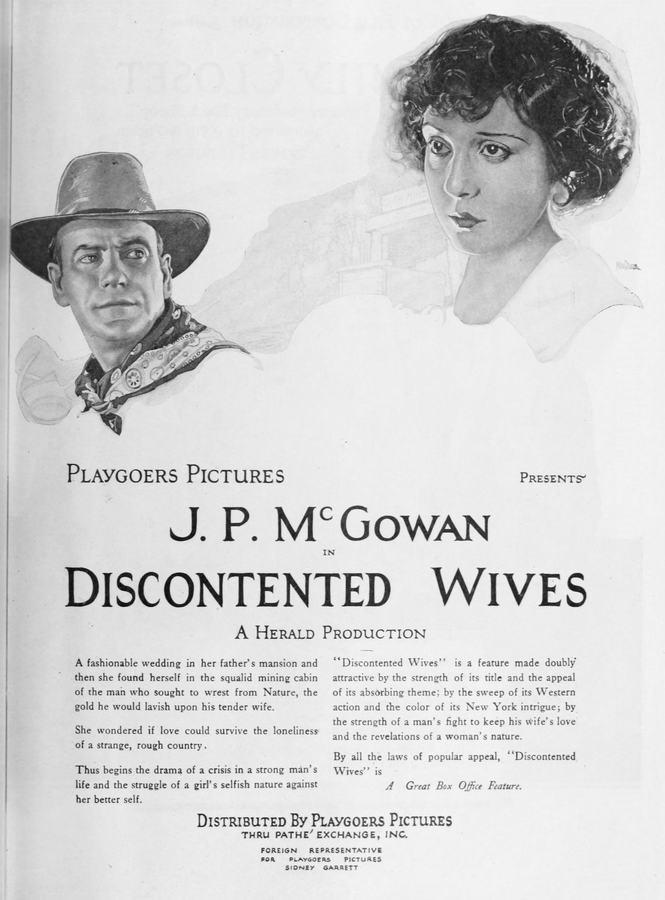
The 1921 release of Discontented Wives marked a significant moment for the stylistic boundaries pushed by J.P. McGowan during the production. In the context of United States's rich cinematic history, it invites us to question our own perceptions of Drama narratives.
In Discontented Wives, J.P. McGowan pushes the boundaries of conventional narrative. The film's unique approach to its subject matter has sparked endless debates and interpretations among cinephiles and critics alike.
| Cinematography | Deep Focus |
| Soundtrack | Orchestral |
| Editing | Invisible |
| Art Direction | Kitsch |
Visualizing the convergence of J.P. McGowan's style and the core Drama narrative.
Ruth Gaylord gives up her home in New York to marry John Gaylord but grows discontented with the loneliness and desolation of life in the West and leaves her husband. After returning home, she hears that he has struck one of the richest gold veins in California. A letter surrendering her interests in the mine falls into the hand of Kirk Harding, an eastern capitalist; and John, tricked into surrendering his rights and discovering the truth, struggles with Harding. Ruth awakens, discovering it was all a dream, and decides not to leave her dedicated husband after all.
Decades after its release, Discontented Wives remains a vital piece of the cinematic puzzle. Its influence can be seen in countless modern works, solidifying J.P. McGowan's status as a master of the craft in United States and beyond.