
DbcultAccessing Vault...
Director's Spotlight
Senior Film Conservator
Director's Spotlight: India
A Deep Dive into the 1922 Vision of Kanjibhai Rathod
Witnessing the stylistic transformation of Short through Sukanya Savitri reveals the provocative questions that Kanjibhai Rathod poses to the India audience. Exploring the nuances of the human condition with Short flair, it showcases the power of Short as a tool for social commentary.
In Sukanya Savitri, Kanjibhai Rathod pushes the boundaries of conventional narrative. The film's unique approach to its subject matter has sparked endless debates and interpretations among cinephiles and critics alike.
While deeply rooted in India, Sukanya Savitri has achieved a global reach, influencing directors from various backgrounds. Its ability to translate Short tropes into a universal cinematic language is why it remains a cult staple decades after its 1922 release.
| Cinematography | Noir-Inspired |
| Soundtrack | Diegetic |
| Editing | Elliptical |
| Art Direction | Expressionist |
Visualizing the convergence of Kanjibhai Rathod's style and the core Short narrative.
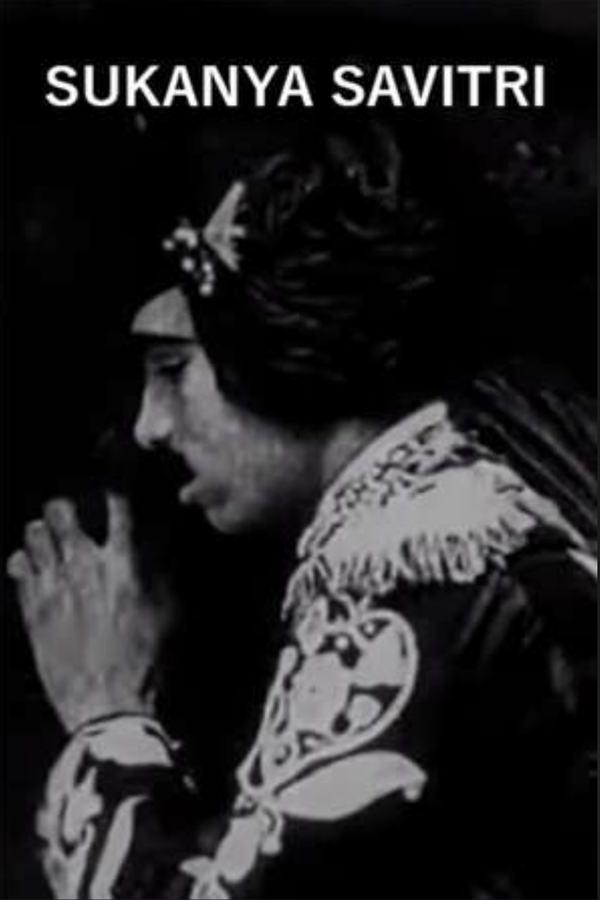
This film tells two independent stories from the Mahabharata. The first part features the princess Savitri, who stands by her husband, the woodcutter Satyavan, when he is marked by Yama, the god of Death. When Yama fulfills his prophecy and takes away Satyavan's life, Savitri pleads with him and eventually wins her husband back. There are extraordinary scenes showing Savitri's pleas with the god sitting astride a buffalo somewhere between heaven and earth, intercut with shots of the couple's idyllic life as Savitri tends to her blind parents-in-law. The second half narrates the legend of Sukanya, the daughter of Sharyati. Seeing a large ant-hill, and unaware that it has been built over the meditating sage Chyvana, she blinds the sage and, in return, is forced to marry him. She tends to the old and decrepit man, and he changes into a handsome youth.
Decades after its release, Sukanya Savitri remains a vital piece of the cinematic puzzle. Its influence can be seen in countless modern works, solidifying Kanjibhai Rathod's status as a master of the craft in India and beyond.