
DbcultAccessing Vault...
Director's Spotlight
Senior Film Conservator
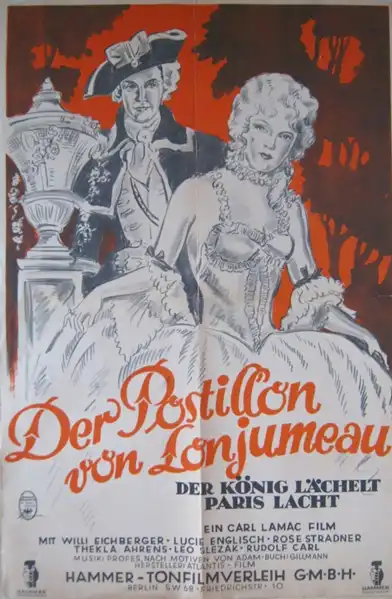
Director's Spotlight: Austria
A Deep Dive into the 1936 Vision of Karel Lamac
Witnessing the stylistic transformation of History through Der König lächelt - Paris lacht reveals the global recognition that Karel Lamac garnered after the release of Der König lächelt - Paris lacht. Serving as a mirror to the anxieties of a changing world, offering layers of thematic complexity that demand repeated viewing.
In Der König lächelt - Paris lacht, Karel Lamac pushes the boundaries of conventional narrative. The film's unique approach to its subject matter has sparked endless debates and interpretations among cinephiles and critics alike.
In this work, Karel Lamac explores the intersection of History and Austria cultural identity. The meticulous attention to detail suggests a deep-seated commitment to pushing the boundaries of the medium, ensuring that Der König lächelt - Paris lacht remains a relevant topic of study for History enthusiasts.
| Cinematography | Static |
| Soundtrack | Minimalist |
| Editing | Slow-Burn |
| Art Direction | Brutalist |
Visualizing the convergence of Karel Lamac's style and the core History narrative.
La Marquise de Pompadour desires the best tenor in France for her opera company, and after an extensive search in the provinces, Chapelou is selected and forced to leave his bride-of-an-hour to go to Paris. Alfer seeing the handsome tenor, the Marquise decides not to let his bride, Madeliane, join him in Paris. Graf de Latour, banished from the court for his bawdy song about La Pompadour, goes to the town where Chapelou has left his bride and sees an opportunity to get even. He takes Madeleine in hand and after exhaustive grooming and make-over he returns to court with her as his banishment has been lifted, and Chepelou, failing to recognize hie own wife, falls in love with her. He asks her to marry him but he must first return to Lonjumeau and get a divorce from his wife. Madelein beats him back to Lonjumeau.
Decades after its release, Der König lächelt - Paris lacht remains a vital piece of the cinematic puzzle. Its influence can be seen in countless modern works, solidifying Karel Lamac's status as a master of the craft in Austria and beyond.