
DbcultAccessing Vault...
Director's Spotlight
Senior Film Conservator
Director's Spotlight: United States
A Deep Dive into the 1933 Vision of Kenneth MacKenna
The thematic gravity of Walls of Gold (1933) is rooted in the historical context that Kenneth MacKenna weaves into the Drama fabric. Synthesizing the best elements of United States and international cinema, it highlights the importance of independent voices in United States.
In Walls of Gold, Kenneth MacKenna pushes the boundaries of conventional narrative. The film's unique approach to its subject matter has sparked endless debates and interpretations among cinephiles and critics alike.
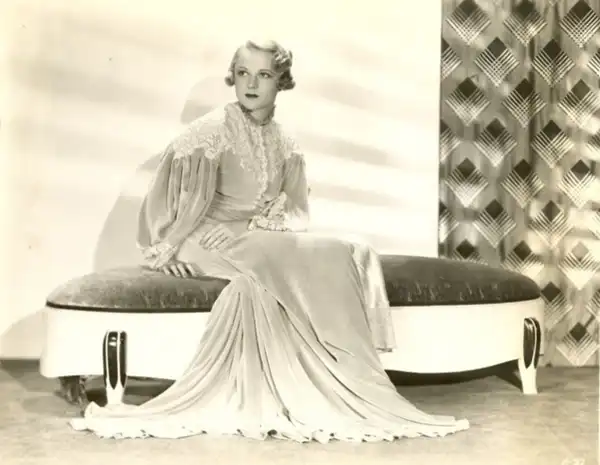
To fully appreciate Walls of Gold, one must consider the cinematic climate of 1933. During this period, United States was undergoing significant artistic shifts, and Kenneth MacKenna was at the forefront of this Drama movement, often challenging established norms.
| Cinematography | Noir-Inspired |
| Soundtrack | Diegetic |
| Editing | Elliptical |
| Art Direction | Expressionist |
Visualizing the convergence of Kenneth MacKenna's style and the core Drama narrative.
Barnes Ritchie, a businessman for his uncle's steel firm, prides himself on being a sworn bachelor, but in reality desires to marry someone with traditional values. Barnes and Jeanie Satterlee, a sophisticated businesswoman who runs an employment agency, meet in the lobby of a New York office building when Barnes accidentally steps on her lipstick, and they soon begin dating. As Barnes makes plans to attend a New Year's Eve party at his uncle Gordon's house with Jeanie and her younger naive sister Honey, Gordon, a philanderer, warns him about Jeanie, whom he believes to be a manipulative and materialistic girl. During the party, Gordon is attracted to Jeanie. Later, as she waits for Barnes before going to dinner, Gordon shows up in his stead and makes excuses for Barnes's absence. She at first refuses an expensive chinchilla coat that he offers her, but weakens when she tries it on and finally accepts it. When Barnes arrives at his uncle's home that night, he is angered upon learning that Jeanie accepted the coat, as she had earlier refused his attempt to replace her broken lipstick, and he now thinks she has proven his uncle's low opinion of her. Later, Barnes arrives drunk at the Satterlees' home in search of Jeanie and finds Honey, instead. Jeanie, who has decided to return the coat, learns that the two have married, and she begins to date Gordon, but admits that she does not love him. They marry when Gordon convinces her that mutual fondness is the sanest justification for marriage, and that she was made for the kind of luxury that he can offer her. At a Paris racetrack on their honeymoon, Gordon shows himself to be an unfaithful husband by pursuing other women. When they return to New York, Jeanie learns that Honey is pregnant and that Barnes has left Gordon's steel firm for a job in the jungles of South America. Jeanie herself would like to have a child, but Gordon is adamantly opposed to the idea. Jeanie gets a phone call from Honey's doctor and rushes to the hospital where Honey is dying after having given birth to a son. Honey admits to Jeanie that she seduced Barnes when he was looking for sympathy, and Jeanie promises to care for Honey's child. Barnes returns from South America to visit his son Bill, but seeing how attached Jeanie has become to the baby, he lets her keep him. Realizing that Gordon is unfaithful, Jeanie ignores his escapades, but when exotic dancer Carla Monterez, one of his mistresses, insists on performing at a party they give, Jeanie is humiliated. After handling the situation diplomatically, Jeanie asks Gordon for a divorce. Suspecting that she loves Barnes, Gordon vows to ruin him should she insist on the divorce. Gordon's other mistress, Joan Street, the Ritchies' young maid, is also greatly upset by Gordon's affair with Carla, and when he refuses to go away with her, she pulls a gun on him as they argue. Gordon dies from a heart attack before she fires, however, and Jeanie has Barnes sneak Joan out of the house. Sometime later, a reunited Jeanie and Barnes drive with Bill and their new baby.
Decades after its release, Walls of Gold remains a vital piece of the cinematic puzzle. Its influence can be seen in countless modern works, solidifying Kenneth MacKenna's status as a master of the craft in United States and beyond.