
DbcultAccessing Vault...
Director's Spotlight
Senior Film Conservator
Director's Spotlight: United States
A Deep Dive into the 1922 Vision of Kenneth S. Webb
The brilliance of Without Fear (1922) is inseparable from the visionary mind of its creator, Kenneth S. Webb. Serving as a mirror to the anxieties of a changing world, it persists as a haunting reminder of our own cinematic history.
In Without Fear, Kenneth S. Webb pushes the boundaries of conventional narrative. The film's unique approach to its subject matter has sparked endless debates and interpretations among cinephiles and critics alike.
To fully appreciate Without Fear, one must consider the cinematic climate of 1922. During this period, United States was undergoing significant artistic shifts, and Kenneth S. Webb was at the forefront of this Drama movement, often challenging established norms.
| Cinematography | Handheld |
| Soundtrack | Synth-Heavy |
| Editing | Disjunctive |
| Art Direction | Baroque |
Visualizing the convergence of Kenneth S. Webb's style and the core Drama narrative.
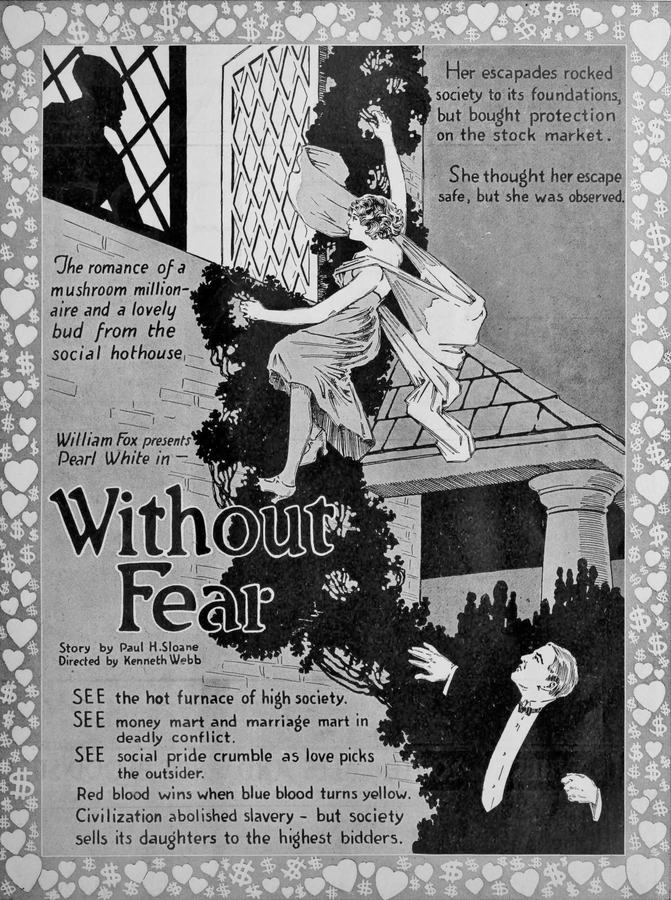
Ruth Hamilton, from a wealthy aristocratic family, cares little for society or its conventions and refuses the proposal of William Barton, a socialite of her parents' choice. While giving some poor children an outing on a beach, Ruth meets John Martin (Miles?), a young nouveau riche with no social standing who is snubbed by the aristocratic circles, and begins to visit him secretly. When Ruth visits John to show off a new costume, her father arrives to seek his financial aid. Ruth escapes, but she is observed by Barton, who informs her father. Hamilton insists that Martin marry his daughter, but Ruth refuses to be compromised by her father. Later, however, she consents to marry John, discovering that he really loves her.
Decades after its release, Without Fear remains a vital piece of the cinematic puzzle. Its influence can be seen in countless modern works, solidifying Kenneth S. Webb's status as a master of the craft in United States and beyond.