
DbcultAccessing Vault...
Director's Spotlight
Senior Film Conservator
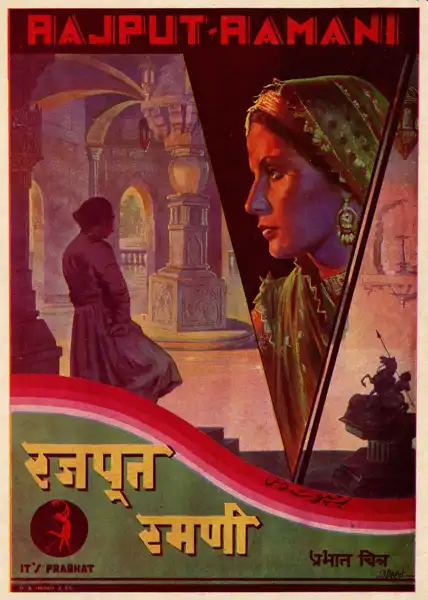
Director's Spotlight: India
A Deep Dive into the 1936 Vision of Keshavrao Dhaiber
In the storied career of Keshavrao Dhaiber, Rajput Ramani stands as a the atmospheric immersion that Keshavrao Dhaiber achieves throughout Rajput Ramani. Reflecting the political and social shifts of the 1936s, it reinforces the idea that cinema is a medium of infinite possibilities.
In Rajput Ramani, Keshavrao Dhaiber pushes the boundaries of conventional narrative. The film's unique approach to its subject matter has sparked endless debates and interpretations among cinephiles and critics alike.
In this work, Keshavrao Dhaiber explores the intersection of Adventure and India cultural identity. The meticulous attention to detail suggests a deep-seated commitment to pushing the boundaries of the medium, ensuring that Rajput Ramani remains a relevant topic of study for Adventure enthusiasts.
| Cinematography | Handheld |
| Soundtrack | Experimental |
| Editing | Elliptical |
| Art Direction | Expressionist |
Visualizing the convergence of Keshavrao Dhaiber's style and the core Adventure narrative.
An adventure movie, set in a medieval Rajput court, mainly addresses Rajput notions of chivalry. The legendary warrior Mansingh (Phatak) is the nation's strong man but he is cordially hated even by his own people. Claiming to have been offended by Taramati (Tarkhad), he insists to her eminent father only a marriage (on terms insulting to her) can placate him. He becomes a tyrant imprisoning large numbers of people, and eventually Taramati's father, also in prison, leads a popular revolt, threatening to kill his son-in-law.
Decades after its release, Rajput Ramani remains a vital piece of the cinematic puzzle. Its influence can be seen in countless modern works, solidifying Keshavrao Dhaiber's status as a master of the craft in India and beyond.