
DbcultAccessing Vault...
Director's Spotlight
Senior Film Conservator
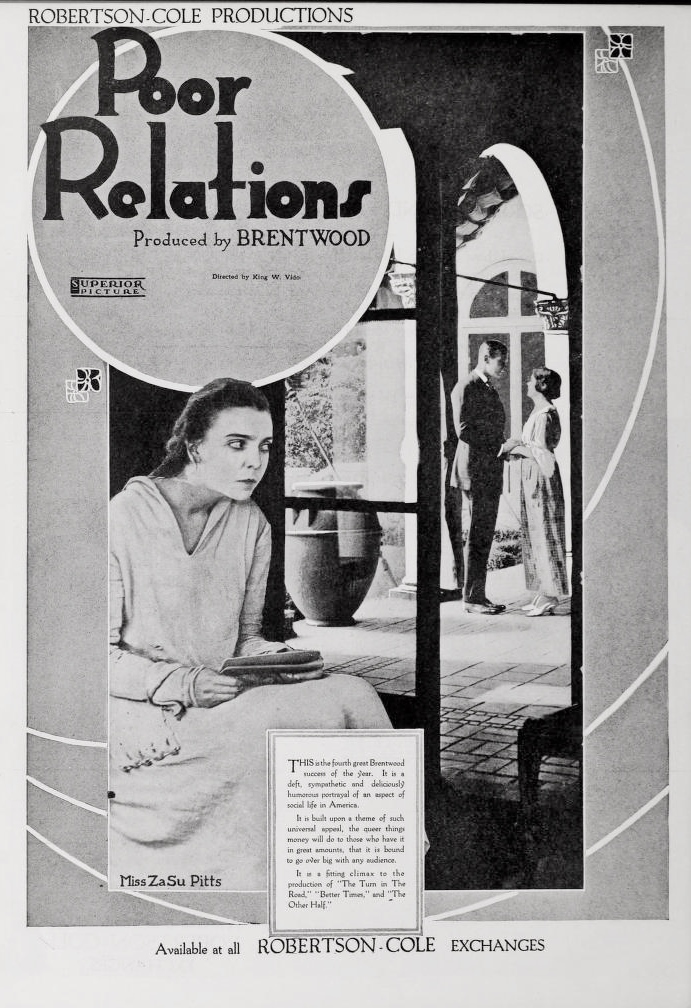
Director's Spotlight: United States
A Deep Dive into the 1919 Vision of King Vidor
In the grand tapestry of cult cinema, Poor Relations serves as a bridge between the bold experimentation that has become synonymous with King Vidor. Breaking the traditional rules of cult engagement, it highlights the importance of independent voices in United States.
In Poor Relations, King Vidor pushes the boundaries of conventional narrative. The film's unique approach to its subject matter has sparked endless debates and interpretations among cinephiles and critics alike.
While deeply rooted in United States, Poor Relations has achieved a global reach, influencing directors from various backgrounds. Its ability to translate cult tropes into a universal cinematic language is why it remains a cult staple decades after its 1919 release.
| Cinematography | Handheld |
| Soundtrack | Orchestral |
| Editing | Invisible |
| Art Direction | Kitsch |
Visualizing the convergence of King Vidor's style and the core cult narrative.
Dorothy Perkins, the eldest daughter of a simple, wholesome country family, leaves for the big city to study architecture. After winning a competition, she is a success, and meets Monty Rhodes, the son of aristocratic parents. Despite his parents' objections, Monty and Dorothy marry, but Mrs. Rhodes continually humiliates Dorothy for her lack of breeding. When she finally succeeds in driving the heartbroken Dorothy back to her own family, Monty realizes his mistake, and follows her to the country, where he finds happiness with his wife and their poor relations.
Decades after its release, Poor Relations remains a vital piece of the cinematic puzzle. Its influence can be seen in countless modern works, solidifying King Vidor's status as a master of the craft in United States and beyond.