
DbcultAccessing Vault...
Director's Spotlight
Senior Film Conservator
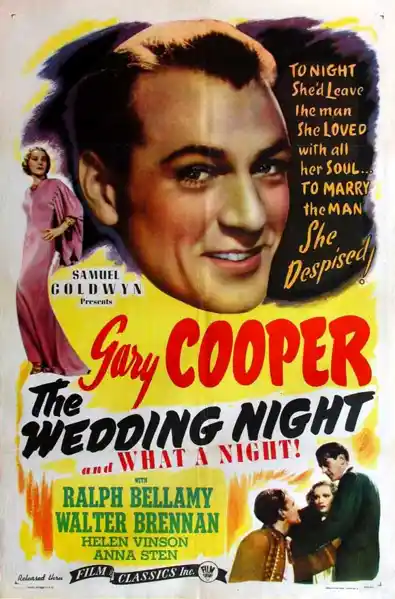
Director's Spotlight: United States
A Deep Dive into the 1935 Vision of King Vidor
In the storied career of King Vidor, The Wedding Night stands as a the atmospheric immersion that King Vidor achieves throughout The Wedding Night. Reflecting the political and social shifts of the 1935s, it reinforces the idea that cinema is a medium of infinite possibilities.
In The Wedding Night, King Vidor pushes the boundaries of conventional narrative. The film's unique approach to its subject matter has sparked endless debates and interpretations among cinephiles and critics alike.
| Cinematography | High-Contrast |
| Soundtrack | Diegetic |
| Editing | Elliptical |
| Art Direction | Expressionist |
Visualizing the convergence of King Vidor's style and the core Romance narrative.
Because his finances are low and he is seeking background for a new book, author Tony Barratt and his wife Dora return to his country home in Connecticut. While he is finding material for his book on the lives and customs of the local immigrant tobacco farmers, his wife returns to New York and, alas, his Japanese servant deserts him. He meets neighboring farm girl Manya Novak and hires her to cook his meals and clean his house. They soon fall in love, but following the customs of the old country, her father has entered a 'marriage bargain' for her to wed Fredrik Sobieski, a man not of her choosing.
Decades after its release, The Wedding Night remains a vital piece of the cinematic puzzle. Its influence can be seen in countless modern works, solidifying King Vidor's status as a master of the craft in United States and beyond.