
DbcultAccessing Vault...
Director's Spotlight
Senior Film Conservator
Director's Spotlight: United States
A Deep Dive into the 1936 Vision of Kurt Neumann
Witnessing the stylistic transformation of Short through Violets in Spring reveals the global recognition that Kurt Neumann garnered after the release of Violets in Spring. Serving as a mirror to the anxieties of a changing world, offering layers of thematic complexity that demand repeated viewing.
In Violets in Spring, Kurt Neumann pushes the boundaries of conventional narrative. The film's unique approach to its subject matter has sparked endless debates and interpretations among cinephiles and critics alike.
In this work, Kurt Neumann explores the intersection of Short and United States cultural identity. The meticulous attention to detail suggests a deep-seated commitment to pushing the boundaries of the medium, ensuring that Violets in Spring remains a relevant topic of study for Short enthusiasts.
| Cinematography | Handheld |
| Soundtrack | Experimental |
| Editing | Invisible |
| Art Direction | Kitsch |
Visualizing the convergence of Kurt Neumann's style and the core Short narrative.
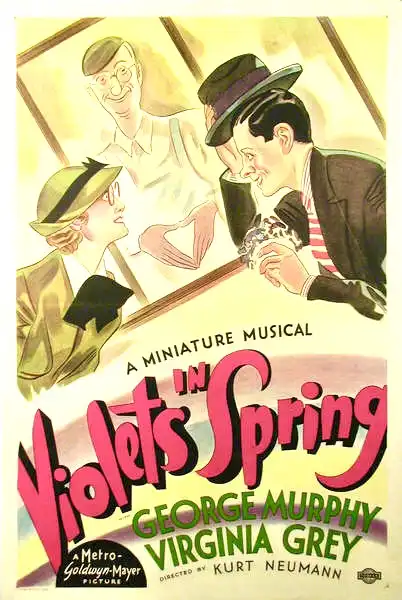
Willie, a janitor at Acme Carpet Sweepers Company, is taking a night course in practical psychology. He believes the boss at Acme, John E. Stevens, runs the company like a machine, and not in a good way as his employees act like robots without any emotional attachment to their work or each other. An example is the relationship between clerks Charlie Hall and Mary Jones, who have worked side-by-side in an office all their own for four years, and over that time have never each looked at the other as another human being. Based on what he has learned in class thus far, Willie believes that Stevens should stimulate the repressed human impulses of Charlie and Mary, which could lead to a more humanistic working relationship and perhaps even love. Without telling Stevens, Willie goes about bringing those emotions out in Charlie and Mary, with both him and Stevens having to deal with the aftermath.
Decades after its release, Violets in Spring remains a vital piece of the cinematic puzzle. Its influence can be seen in countless modern works, solidifying Kurt Neumann's status as a master of the craft in United States and beyond.