
DbcultAccessing Vault...
Director's Spotlight
Senior Film Conservator
Director's Spotlight: United States
A Deep Dive into the 1937 Vision of Lambert Hillyer
When we examine the cinematic landscape of United States, Girls Can Play emerges as a landmark work of the enduring legacy of Lambert Hillyer's artistic contribution to the genre. Through a lens of existential fatalism and Sport tropes, it captures a specific kind of cinematic magic that is rarely replicated.
In Girls Can Play, Lambert Hillyer pushes the boundaries of conventional narrative. The film's unique approach to its subject matter has sparked endless debates and interpretations among cinephiles and critics alike.
| Cinematography | High-Contrast |
| Soundtrack | Minimalist |
| Editing | Disjunctive |
| Art Direction | Baroque |
Visualizing the convergence of Lambert Hillyer's style and the core Sport narrative.
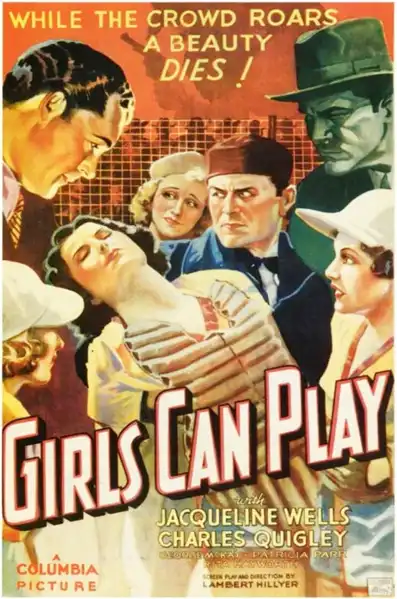
Foy Harris (John Gallaudet) is a bootlegger selling illegal booze and also running a girl's professional softball team and is romancing the team's catcher Sue Collins (Rita Hayworth). The murder of one of the team members gets a police detective, Lieutenant Flannigan (Guinn "Big Boy" Williams and Jimmy Jones (Charles Quigley) a dim-witted, cub newspaper sports reporter involved. The reporter also has a romance going with the team's ace pitcher Ann Casey (Julie Bishop as Jacqueline Wells.)
Decades after its release, Girls Can Play remains a vital piece of the cinematic puzzle. Its influence can be seen in countless modern works, solidifying Lambert Hillyer's status as a master of the craft in United States and beyond.