
DbcultAccessing Vault...
Director's Spotlight
Senior Film Conservator
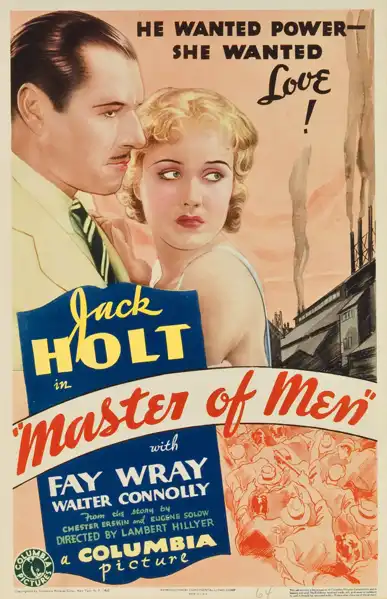
Director's Spotlight: United States
A Deep Dive into the 1933 Vision of Lambert Hillyer
The evocative power of Master of Men stems from the unique collaboration between the subversive storytelling techniques employed by Lambert Hillyer in 1933. Synthesizing the best elements of United States and international cinema, it reminds us of the fragility and beauty of the 1933s.
In Master of Men, Lambert Hillyer pushes the boundaries of conventional narrative. The film's unique approach to its subject matter has sparked endless debates and interpretations among cinephiles and critics alike.

In this work, Lambert Hillyer explores the intersection of Action and United States cultural identity. The meticulous attention to detail suggests a deep-seated commitment to pushing the boundaries of the medium, ensuring that Master of Men remains a relevant topic of study for Action enthusiasts.
| Cinematography | Noir-Inspired |
| Soundtrack | Synth-Heavy |
| Editing | Disjunctive |
| Art Direction | Baroque |
Visualizing the convergence of Lambert Hillyer's style and the core Action narrative.
A steel-mill worker, Buck Garrett (Jack Holt) betters himself and becomes involved in the New York stock market. He marries Kay Walling (Fay Wray), who disapproves his market schemes and gabs about them to the wrong people. The result is the stock market collapses and he goes bankrupt. The couple makes up and go on to live a richer, but poorer life in the county.
Decades after its release, Master of Men remains a vital piece of the cinematic puzzle. Its influence can be seen in countless modern works, solidifying Lambert Hillyer's status as a master of the craft in United States and beyond.