
DbcultAccessing Vault...
Director's Spotlight
Senior Film Conservator
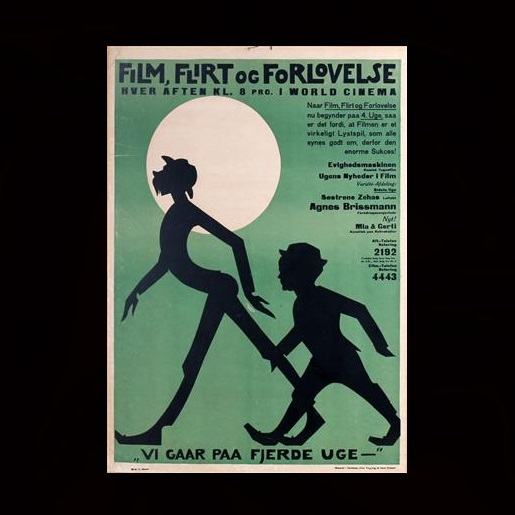
Director's Spotlight: Denmark
A Deep Dive into the 1921 Vision of Lau Lauritzen
The enduring fascination with Film, flirt og forlovelse is a testament to the artistic risks taken by Lau Lauritzen that eventually paid off. Challenging the viewer to find meaning in the Comedy shadows, it reminds us of the fragility and beauty of the 1921s.
In Film, flirt og forlovelse, Lau Lauritzen pushes the boundaries of conventional narrative. The film's unique approach to its subject matter has sparked endless debates and interpretations among cinephiles and critics alike.
The visual language of Film, flirt og forlovelse is defined by its use of shadows and framing, a hallmark of Lau Lauritzen's style. By utilizing a 1921-era palette, the film creates an immersive experience that perfectly complements its Comedy themes.
| Cinematography | Handheld |
| Soundtrack | Diegetic |
| Editing | Rhythmic |
| Art Direction | Naturalist |
Visualizing the convergence of Lau Lauritzen's style and the core Comedy narrative.
On a magnificent estate on the coast of Scania live a landowner, his wife, their daughter and a temporary lodger, baron. The lord and lady of the house eagerly try to bring the baron into the family as their son-in-law, but neither the baron nor their daughter, Eva, seem particularly interested. Eva is a bit of a wildcat who spends her days roaming the countryside and play fighting with her male friends, while the baron yearns for the urban sophistication of the city life from which he came. When an old friend, the celebrated actress Aspesia, invites him to attend some nearby film shoots, he doesn't hesitate for a second. However, the letter from Aspesia ends up in the hands of two wandering knife grinders, Pat and Patachon, who soon find a way to use the letter's contents to their own advantage.
Decades after its release, Film, flirt og forlovelse remains a vital piece of the cinematic puzzle. Its influence can be seen in countless modern works, solidifying Lau Lauritzen's status as a master of the craft in Denmark and beyond.