
DbcultAccessing Vault...
Director's Spotlight
Senior Film Conservator
Director's Spotlight: United States
A Deep Dive into the 1914 Vision of Lawrence B. McGill
In the grand tapestry of cult cinema, In Mizzoura serves as a bridge between the bold experimentation that has become synonymous with Lawrence B. McGill. Breaking the traditional rules of cult engagement, it highlights the importance of independent voices in United States.
In In Mizzoura, Lawrence B. McGill pushes the boundaries of conventional narrative. The film's unique approach to its subject matter has sparked endless debates and interpretations among cinephiles and critics alike.
To fully appreciate In Mizzoura, one must consider the cinematic climate of 1914. During this period, United States was undergoing significant artistic shifts, and Lawrence B. McGill was at the forefront of this cult movement, often challenging established norms.
| Cinematography | High-Contrast |
| Soundtrack | Orchestral |
| Editing | Slow-Burn |
| Art Direction | Brutalist |
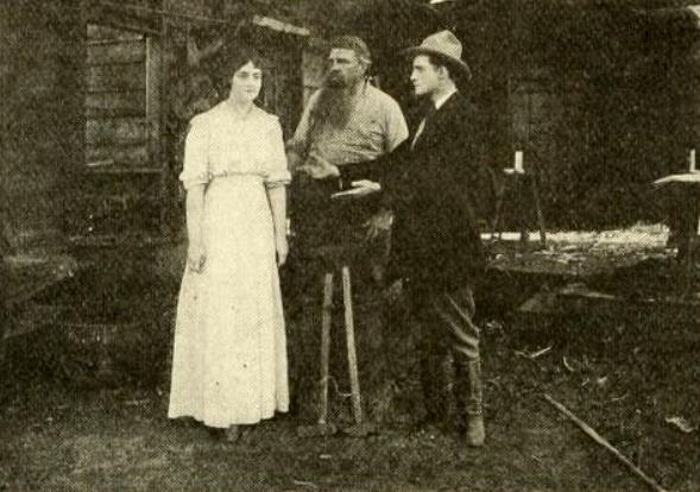
Visualizing the convergence of Lawrence B. McGill's style and the core cult narrative.
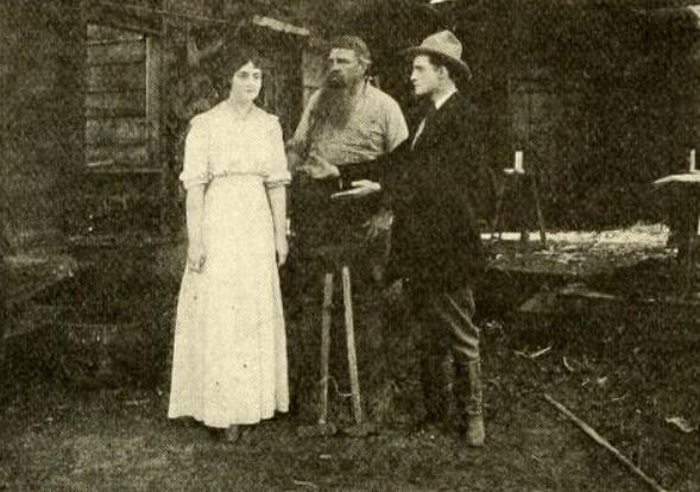
In the town of Bowling Green, Missouri, there lives Jo Vernon, a village blacksmith, his wife and daughters. Kate and Elizabeth. Jim Radburn, a native and resident of the same town, is sheriff of Pike County. Since childhood he has planned that some day he and Kate Vernon are to be married, and unbeknown to her, although with the sanction of her father, he pays for her tuition through college. Sam Fowler an express messenger on the Missouri Pacific R.R., is in love with Jim Radburn's sister, Emily, and with the beginning of the story he becomes engaged to her. Robert Travers, alias "Jim Cummings," a holdup man, forges the signature of the railroad division superintendent to an order permitting the bearer to ride in the express car with the express messenger, Fowler. As the train speeds on its way, Travers attacks and overpowers Fowler and robs the car. Travers makes his escape and Sam, accused by the express company of having been an accomplice, is thrown in jail. The hold-up happens in Pike County, and Radburn, the sheriff, sets out to run down the criminal. Through newspaper accounts of the robbery, Travers learns that Fowler has been unjustly imprisoned, and in accordance with his usual practice, writes to the editor advising him of Fowler's innocence, enclosing one of the express envelopes which were stolen as proof. Shortly after Travers drifts to the town of Bowling Green and by chance becomes acquainted with the Vernon family. He becomes enamored of Kate, who in turn gives him her love, discarding Jim Radburn for the thought of the bigger, gayer and brighter life which Travers has pictured. A letter sent to Kate by Travers planning their elopement comes to Kate's mother's attention, and she demands to see it. She shows it to Jim, who immediately recognizes a similarity in the handwriting of this note and the forged order which was delivered to the express messenger, Fowler, at the time of the robbery. Jim immediately begins to run down the clue to get his man. Through the efforts of Jim, Sam is exonerated and reinstated by the railroad company, and during one of his trips to Bowling Green he accidentally meets up with and recognizes Travers in the village drug store. Travers makes his getaway in a wild fight, and jumping through the window, turns toward Kate's home for a hiding-place. Her father and family joining the mob in search of Travers, have left her alone. Jim, close on the trail of his man, traces him to the Vernon home, and there corners him. Because of his love for Kate, and to prevent possible injury to her name, he permits the escape of Travers, aiding him by giving him his own horse to ride across the border. Through a strange coincidence, shortly after the robbery while working for Sam's release, Jim, in caring for a homeless pup which has had its leg broken, discovers that the mud of the river bottom, or gumbo, if baked, would make a wonderful railroad red ballast. He visits the railroad officials at St. Louis and closes a most profitable contract. Because of his newer fields he resigns his position as sheriff a day before he meets up with Travers. Travers is arrested in a neighboring town by two countrymen, who recognize Jim's horse. Jim is telegraphed, and replies that everything is all right and that he has given the horse to the man Travers. Questioning Jim's explanation, the two men prepare to take Travers back to Bowling Green. He attempts escape and is shot. Jim has been nominated for legislator, and when his action in permitting Travers to escape becomes known, he is denounced in a public meeting by Col. Bollinger for having failed to fulfill his duties as sheriff. Jo Vernon, knowing of Jim's resignation, addresses the meeting and exonerates him. The townspeople, incited by Bollinger's speech, turn against Jim and start for his house to seek their vengeance. Jim meets them at the gate and warns them off, just as Jo arrives to explain to them that Jim Radburn had resigned as sheriff the day before. The better way is evidenced to Kate, and she learns that her love belongs to Jim.
Decades after its release, In Mizzoura remains a vital piece of the cinematic puzzle. Its influence can be seen in countless modern works, solidifying Lawrence B. McGill's status as a master of the craft in United States and beyond.