
DbcultAccessing Vault...
Director's Spotlight
Senior Film Conservator
Director's Spotlight: United States
A Deep Dive into the 1914 Vision of Lawrence B. McGill
The enduring fascination with The Greyhound is a testament to the artistic risks taken by Lawrence B. McGill that eventually paid off. Challenging the viewer to find meaning in the cult shadows, it reminds us of the fragility and beauty of the 1914s.
In The Greyhound, Lawrence B. McGill pushes the boundaries of conventional narrative. The film's unique approach to its subject matter has sparked endless debates and interpretations among cinephiles and critics alike.
The visual language of The Greyhound is defined by its use of shadows and framing, a hallmark of Lawrence B. McGill's style. By utilizing a 1914-era palette, the film creates an immersive experience that perfectly complements its cult themes.
| Cinematography | Static |
| Soundtrack | Experimental |
| Editing | Invisible |
| Art Direction | Kitsch |
Visualizing the convergence of Lawrence B. McGill's style and the core cult narrative.
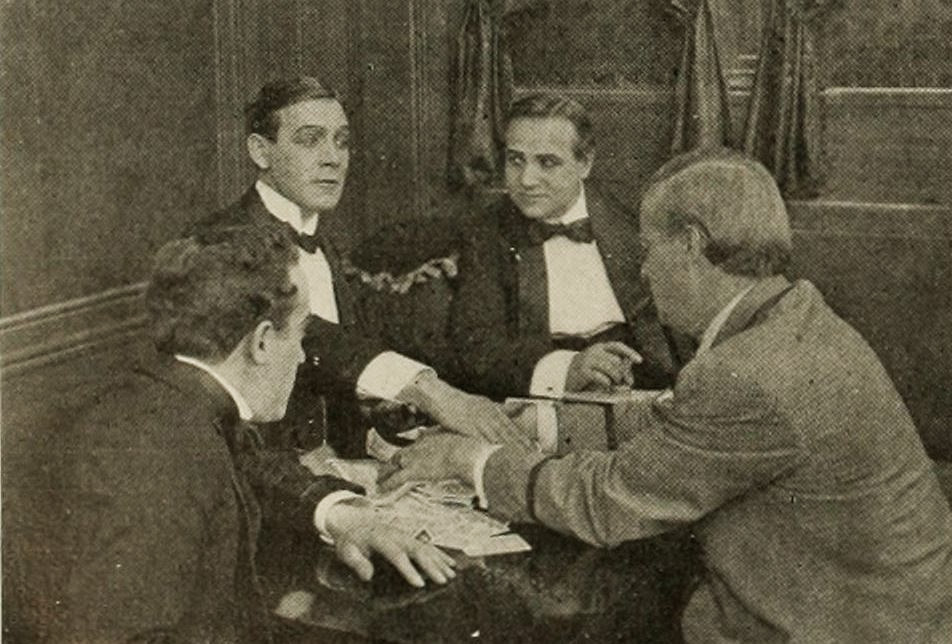
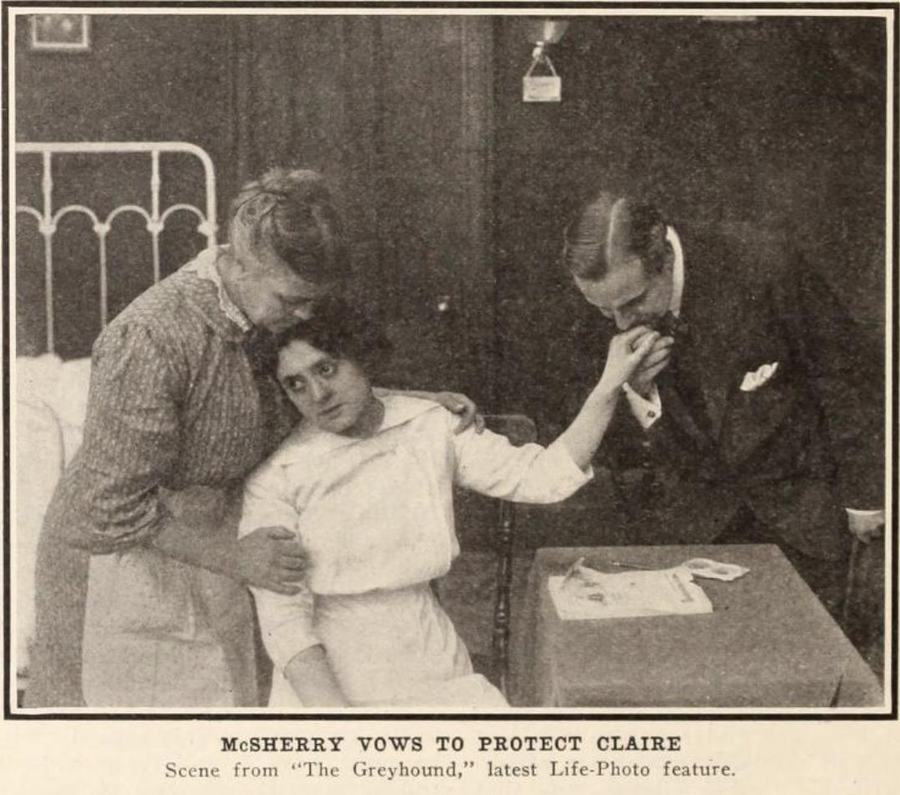
Claire Fellman, wife of Louis Fellman, alias "The Greyhound," after unsuccessfully pleading with her husband, confidence man and card sharp, to forsake his ways, determines to leave him, yet watch his movements. Her pleadings being of no avail, she determines to inform the police in advance of every contemplated scheme of her husband, in order to frustrate them. Associated with "The Greyhound" is Jack Fay, alias "The Pale Face Kid," an uncouth crook, J. Crawford Alexander, alias "Whispering Alex," a suave gentlemanly, intelligent card sharp, and Baroness Von Hilde, alias "Deep Sea Kitty," an adventuress. The various preconceived plans of the quartet all go astray because of the timely intervention of the police, until finally suspicion is aroused that Claire, the Greyhound's wife, has had a hand in the frustrating of their plans. Claire, awakening to the fact that her final endeavors to reform Fellman are of no avail, determines upon suicide. She is about to consummate the act when McSherry, formerly a card sharp, but now reformed, and in the employ of "The Eye," a police inspector, and who has always loved Claire, intervenes, and persuades her to permit him to act as her protector. Because of Fellman's brutal treatment of his wife, McSherry vows vengeance and thereafter devotes his time shadowing Fellman and his clan. "The Greyhound," before leaving for Europe, entered into a death pact with his wife, who still loved him. Claire drinks the poison potion, while Fellman leads her to believe that he has taken his. However, the dose is not fatal, and merely renders her unconscious. A letter of introduction to Mrs. Allen and her son, Porter, and daughter, Bess, is forged by "Whispering Alex," giving Fellman entry into their circle. A scheme is hatched whereby the Allens are to be defrauded of a vast sum of money, and "Deep Sea Kitty," on her part, intrigues to ensnare young Porter Allen into a promise of marriage. On board the S.S. Olympic, going to Europe, the Allens, Fellman and his associates meet. McSherry and Claire are on the same boat, Claire going to Europe to recover her health, under McSherry's protection. The card sharps inveigle Bob, Bess Allen's fiancé, into a poker game. McSherry, seeing that the boy is in bad company, joins the game and by one of his old tricks, gives Bob the winning hand. On board ship, Fellman sees his wife, and believes that she is the ghost of herself come to haunt him. The plans of Fellman and his clan are frustrated by McSherry, and they are exposed. Things go from bad to worse for them, until finally Fellman, laboring under the delusion that his wife's ghost continually pursues him, in a fit of despondency and desperation, falls overboard and is drowned.
Decades after its release, The Greyhound remains a vital piece of the cinematic puzzle. Its influence can be seen in countless modern works, solidifying Lawrence B. McGill's status as a master of the craft in United States and beyond.