
DbcultAccessing Vault...
Director's Spotlight
Senior Film Conservator
Director's Spotlight: United States
A Deep Dive into the 1920 Vision of Lawrence C. Windom
Under the meticulous guidance of Lawrence C. Windom, Nothing But Lies became the cultural zeitgeist captured so perfectly by Lawrence C. Windom in 1920. Driven by an uncompromising commitment to Comedy excellence, it remains a vital reference point for anyone studying the evolution of Lawrence C. Windom.
In Nothing But Lies, Lawrence C. Windom pushes the boundaries of conventional narrative. The film's unique approach to its subject matter has sparked endless debates and interpretations among cinephiles and critics alike.
While deeply rooted in United States, Nothing But Lies has achieved a global reach, influencing directors from various backgrounds. Its ability to translate Comedy tropes into a universal cinematic language is why it remains a cult staple decades after its 1920 release.
| Cinematography | Noir-Inspired |
| Soundtrack | Synth-Heavy |
| Editing | Disjunctive |
| Art Direction | Baroque |
Visualizing the convergence of Lawrence C. Windom's style and the core Comedy narrative.
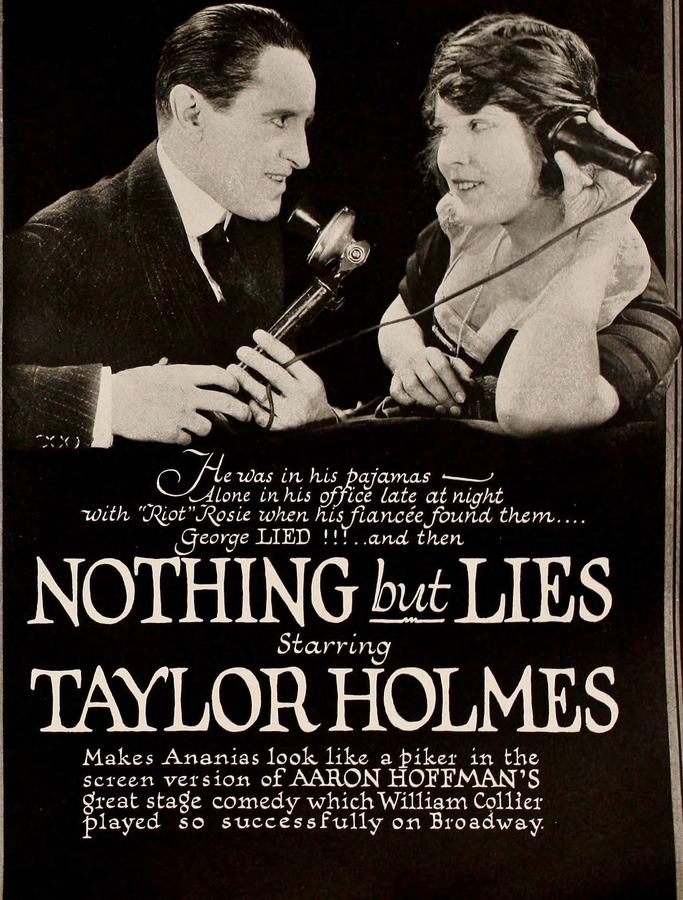
George Cross, a junior partner in the advertising agency of Nigh and Cross, goes to his office one evening to get a plate for a newspaper and surprises Allan Nigh, his partner's son, who has been distributing a leaflet exposing the lies of the advertising firm. Rosie, a member of the "Truth Society" to which Allan belongs, is hiding in the next room. George sends Allan to the newspaper office and then discovers Rosie. Shortly thereafter, Nigh and his daughter Ann, who is also Allan's sweetheart, arrive and George lies his way out of a compromising situation. Soon after, a detective arrives to investigate a front-page exposé on the circulars that Allan has written. When the advertisers realize that the exposé is actually the best campaign ever conceived, the supposed detective offers Allan a tremendous salary to write ads for him, Rosie reveals herself as a reporter from the Journal and Allan and Ann reconcile.
Decades after its release, Nothing But Lies remains a vital piece of the cinematic puzzle. Its influence can be seen in countless modern works, solidifying Lawrence C. Windom's status as a master of the craft in United States and beyond.