
DbcultAccessing Vault...
Director's Spotlight
Senior Film Conservator
Director's Spotlight: United States
A Deep Dive into the 1919 Vision of Lawrence C. Windom
Few works in United States cinema carry the same weight as Upside Down, especially regarding the technical innovation that Lawrence C. Windom introduced to the cult format. Subverting the expectations of the typical 1919 audience, it bridges the gap between traditional cult and contemporary vision.
In Upside Down, Lawrence C. Windom pushes the boundaries of conventional narrative. The film's unique approach to its subject matter has sparked endless debates and interpretations among cinephiles and critics alike.
The visual language of Upside Down is defined by its use of shadows and framing, a hallmark of Lawrence C. Windom's style. By utilizing a 1919-era palette, the film creates an immersive experience that perfectly complements its cult themes.
| Cinematography | Deep Focus |
| Soundtrack | Orchestral |
| Editing | Invisible |
| Art Direction | Kitsch |
Visualizing the convergence of Lawrence C. Windom's style and the core cult narrative.
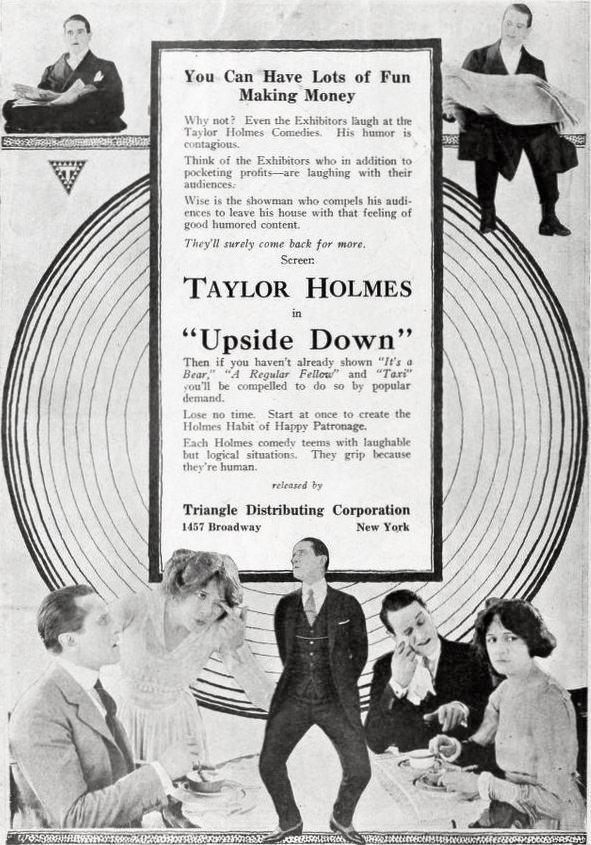
When Juliet Pim, bored with her husband Archibald's habitual ardent attentions, goes to a Swami, his advice that her "individualism" is being crushed leads her to request that Pim furnish her with a "reason" for a divorce suit. Shocked but compliant, Pim rents a hotel room. Later, he finds his college friend and rival stockbroker, wealthy James Wortley Tammers, at a restaurant with his wife, who also felt neglected and went to the Swami. Pim joins them and then goes with Mrs. Tammers to a roadhouse. After Tammers locates them, and his wife returns, the two husbands engage in an all-night wine party with cabaret dancers. The next day, while Tammers sleeps, Pim manipulates the market to control Tammers' wealth. The newspaper reports of Pim's elopement with Mrs. Tammers leave Juliet valuing her husband more than her freedom. After Pim reveals he was saving Tammers from a scheme to ruin him, he sells back most of the stocks and the couples are reunited.
Decades after its release, Upside Down remains a vital piece of the cinematic puzzle. Its influence can be seen in countless modern works, solidifying Lawrence C. Windom's status as a master of the craft in United States and beyond.