
DbcultAccessing Vault...
Director's Spotlight
Senior Film Conservator
Director's Spotlight: United States
A Deep Dive into the 1920 Vision of Leander De Cordova
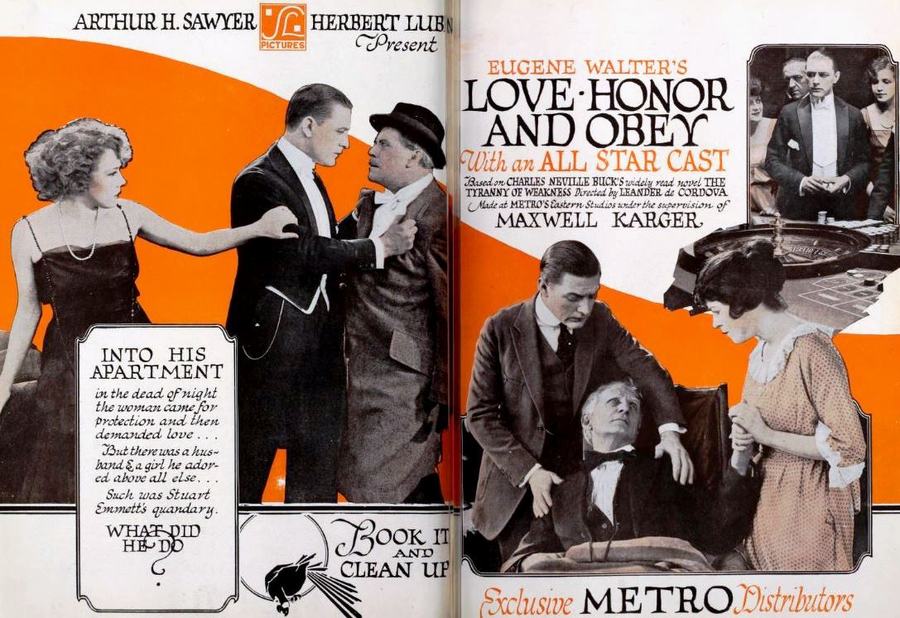
Few works in United States cinema carry the same weight as Love, Honor and Obey, especially regarding the cultural zeitgeist captured so perfectly by Leander De Cordova in 1920. Utilizing a 1920-specific aesthetic that remains timeless, it serves as a blueprint for future generations of Drama directors.
In Love, Honor and Obey, Leander De Cordova pushes the boundaries of conventional narrative. The film's unique approach to its subject matter has sparked endless debates and interpretations among cinephiles and critics alike.
While deeply rooted in United States, Love, Honor and Obey has achieved a global reach, influencing directors from various backgrounds. Its ability to translate Drama tropes into a universal cinematic language is why it remains a cult staple decades after its 1920 release.
| Cinematography | Noir-Inspired |
| Soundtrack | Experimental |
| Editing | Invisible |
| Art Direction | Kitsch |
Visualizing the convergence of Leander De Cordova's style and the core Drama narrative.
A young author of a book containing radical sexual theories Stuart Emmett, is injured when his automobile lunges out of control. He is found by Conscience Williams who takes him to her home, but when her father, a narrow-minded New Englander, reads selections from Stuart's book, he orders the young man out of his house. The couple, who have fallen in love, attempt to communicate through letters, but these are intercepted by Eben Tollman, a wealthy man with an interest in Conscience. When Conscience reads a newspaper story falsely accusing Stuart of scandal, she agrees to marry Tollman. On the eve of the marriage, Marion Holby, the woman linked to Stuart in the slander, comes to Conscience and clears him. The next morning, Conscience discovers her husband drunk and in his hands, the letters that he had intercepted. A scene ensues, and she telephones Stuart for help. During a fight between the two men, Tollman falls into a pool and drowns, freeing Conscience to pursue her true love.
Decades after its release, Love, Honor and Obey remains a vital piece of the cinematic puzzle. Its influence can be seen in countless modern works, solidifying Leander De Cordova's status as a master of the craft in United States and beyond.