
DbcultAccessing Vault...
Director's Spotlight
Senior Film Conservator
Director's Spotlight: United States
A Deep Dive into the 1934 Vision of Leo Bulgakov
Witnessing the stylistic transformation of Crime through White Lies reveals the global recognition that Leo Bulgakov garnered after the release of White Lies. Serving as a mirror to the anxieties of a changing world, offering layers of thematic complexity that demand repeated viewing.
In White Lies, Leo Bulgakov pushes the boundaries of conventional narrative. The film's unique approach to its subject matter has sparked endless debates and interpretations among cinephiles and critics alike.
The visual language of White Lies is defined by its use of shadows and framing, a hallmark of Leo Bulgakov's style. By utilizing a 1934-era palette, the film creates an immersive experience that perfectly complements its Crime themes.
| Cinematography | Handheld |
| Soundtrack | Minimalist |
| Editing | Disjunctive |
| Art Direction | Baroque |
Visualizing the convergence of Leo Bulgakov's style and the core Crime narrative.
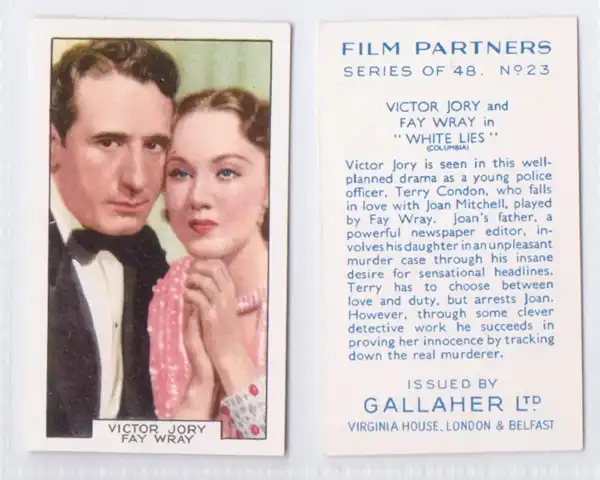
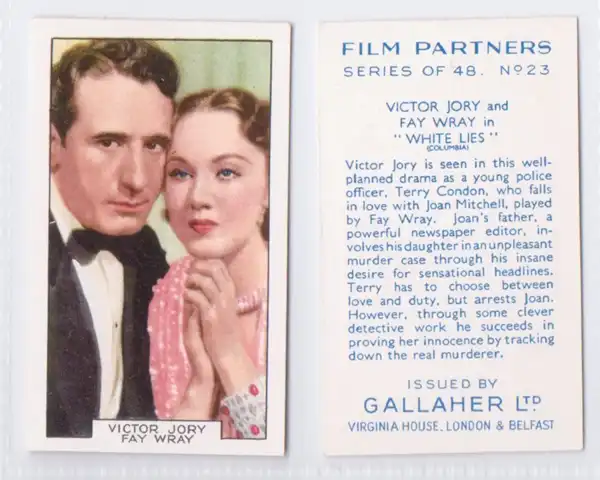
John Mitchell is a powerful and ruthless newspaper publisher, who doesn't care who gets hurt if a good story can run in his paper. Caught speeding, by honest cop Terry Condon, his first impulse is to have him broken, but he's talked into having him commended instead by his daughter, Joan Mitchell. Another man, Dan Oliver, is found by a reporter to have embezzled money, though is quietly paying it back, but Mitchell cares not, and spills all in his newsrag, so Oliver is ruined, and jailed. At his sentencing, Oliver produces a gun, and gets away. Later Joan tries to help Oliver's girl Mary by moving her to a new apartment, but the now crazed Oliver misunderstands, shoots Joan's Boyfriend dead and stages it to look like she'd done it. With her on trial for murder, John Mitchell is finally faced with just what his lack of compassion has wrought.
Decades after its release, White Lies remains a vital piece of the cinematic puzzle. Its influence can be seen in countless modern works, solidifying Leo Bulgakov's status as a master of the craft in United States and beyond.