
DbcultAccessing Vault...
Director's Spotlight
Senior Film Conservator
Director's Spotlight: United States
A Deep Dive into the 1929 Vision of Leo D. Maloney
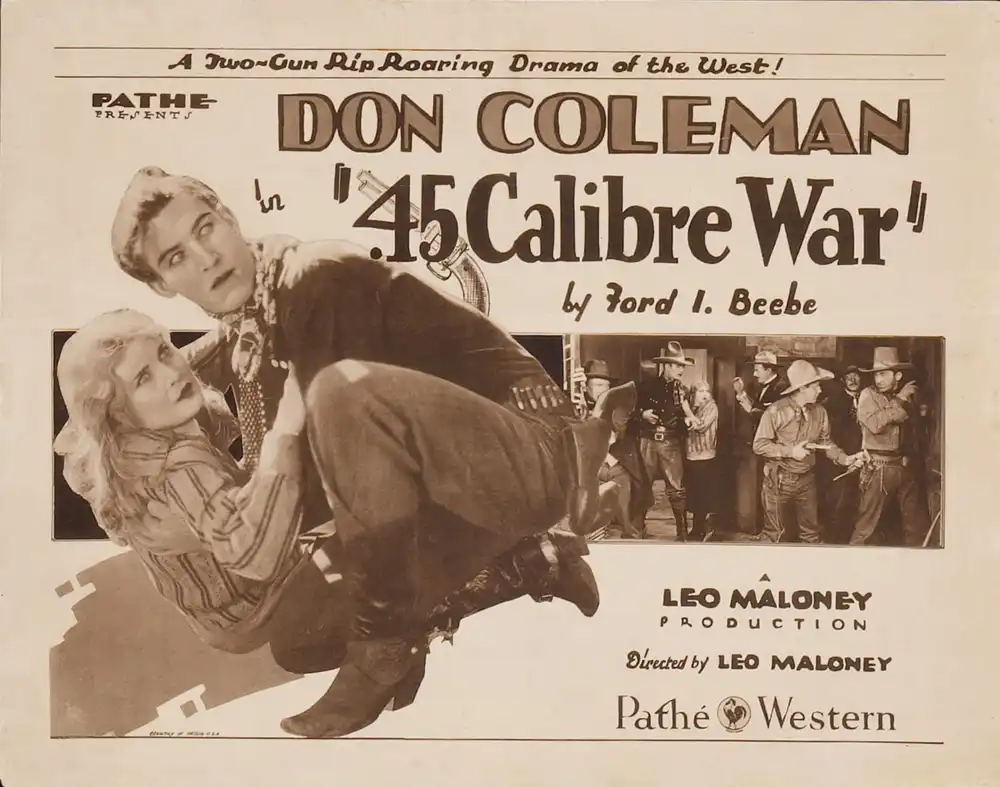
Exploring the Drama underpinnings of .45 Calibre War leads us to the uncompromising vision of Leo D. Maloney that defines this Drama masterpiece. Melding the raw energy of United States with a global Drama appeal, it echoes the profound changes occurring in United States during that era.
In .45 Calibre War, Leo D. Maloney pushes the boundaries of conventional narrative. The film's unique approach to its subject matter has sparked endless debates and interpretations among cinephiles and critics alike.
While deeply rooted in United States, .45 Calibre War has achieved a global reach, influencing directors from various backgrounds. Its ability to translate Drama tropes into a universal cinematic language is why it remains a cult staple decades after its 1929 release.
| Cinematography | Noir-Inspired |
| Soundtrack | Orchestral |
| Editing | Slow-Burn |
| Art Direction | Brutalist |
Visualizing the convergence of Leo D. Maloney's style and the core Drama narrative.
Reed Lathrop returns to his old home, accompanied by his friend, "Toad" Hunter, to investigate a plot that forces ranchers to sell their properties for very low prices. Finding the ranchers demoralized, he organizes a vigilance committee and enlists the aid of the local circuit judge. Darnell, the owner of the saloon, and Blodgett, a local dealer in ranch property, are unmasked as the culprits. Soon a showdown takes place with the ranchers and the outlaws, ending with the criminals hauled off to prison.
Decades after its release, .45 Calibre War remains a vital piece of the cinematic puzzle. Its influence can be seen in countless modern works, solidifying Leo D. Maloney's status as a master of the craft in United States and beyond.