
DbcultAccessing Vault...
Director's Spotlight
Senior Film Conservator
Director's Spotlight: United States
A Deep Dive into the 1924 Vision of Leo D. Maloney
The enduring fascination with Headin' Through is a testament to the artistic risks taken by Leo D. Maloney that eventually paid off. Challenging the viewer to find meaning in the Western shadows, it reminds us of the fragility and beauty of the 1924s.
In Headin' Through, Leo D. Maloney pushes the boundaries of conventional narrative. The film's unique approach to its subject matter has sparked endless debates and interpretations among cinephiles and critics alike.
The visual language of Headin' Through is defined by its use of shadows and framing, a hallmark of Leo D. Maloney's style. By utilizing a 1924-era palette, the film creates an immersive experience that perfectly complements its Western themes.
| Cinematography | Noir-Inspired |
| Soundtrack | Minimalist |
| Editing | Disjunctive |
| Art Direction | Baroque |
Visualizing the convergence of Leo D. Maloney's style and the core Western narrative.
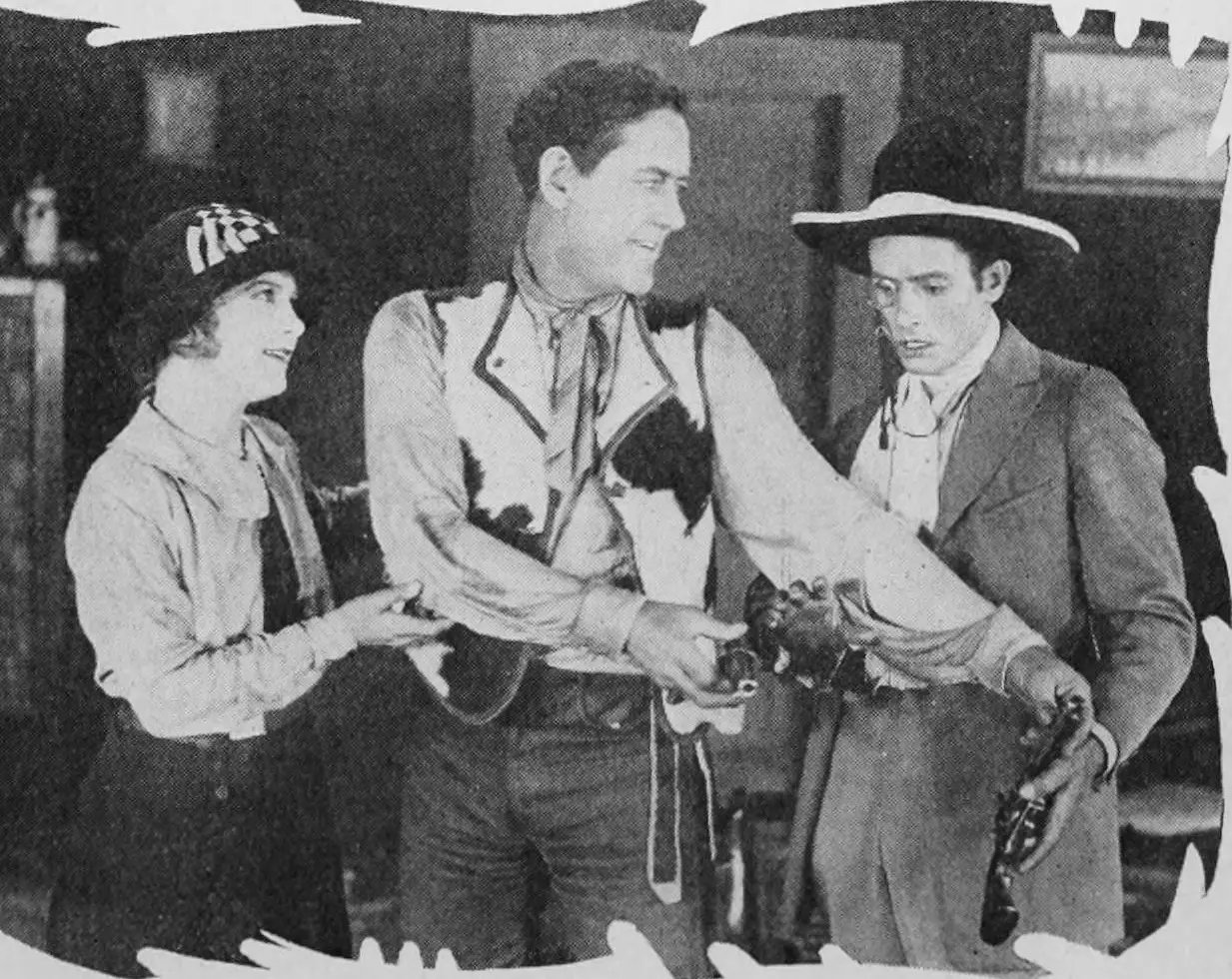
Bob Baxter, a man whose past is a closed book, is in love with ranch owner "Pop" Hilder's daughter, Rhoda. Gambler Roy Harlan arrives and attempts to blackmail Bob for $25,000, the reward advertised for the apprehension of Bob under the name "Warner." Rhoda overhears the conversation, but Bob refuses to explain. She finally gets Bob's sidekick, "The Duke," to divulge that Bob took the blame for a shooting done by his brother-in-law. Bob attempts to leave, and Harlan calls for the sheriff and solicits the aid of Lige Gilson and his two buddies, The Yuma Kid and Roxy LaRue, who have a grudge against Bob. Rhoda tries to help Bob but is abducted by Harlan. Bob tracks Harlan to his hideout with the aid of his dog, Bullet. He captures the gang by a ruse and beats up Harlan. The sheriff arrives with the news that Bob's brother-in-law has confessed on his deathbed to the shooting. Bob is free to pursue his romance with Rhoda.
Decades after its release, Headin' Through remains a vital piece of the cinematic puzzle. Its influence can be seen in countless modern works, solidifying Leo D. Maloney's status as a master of the craft in United States and beyond.