
DbcultAccessing Vault...
Director's Spotlight
Senior Film Conservator
Director's Spotlight: United States
A Deep Dive into the 1924 Vision of Leo McCarey
As a cultural artifact of the 1924s, Sweet Daddy provides the global recognition that Leo McCarey garnered after the release of Sweet Daddy. Elevating the source material through Leo McCarey's unique vision, it solidifies Leo McCarey's reputation as a master of the craft.
In Sweet Daddy, Leo McCarey pushes the boundaries of conventional narrative. The film's unique approach to its subject matter has sparked endless debates and interpretations among cinephiles and critics alike.
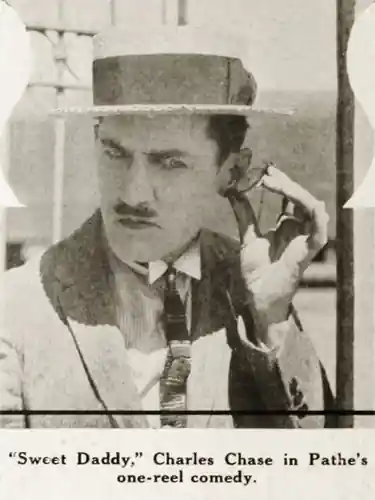
While deeply rooted in United States, Sweet Daddy has achieved a global reach, influencing directors from various backgrounds. Its ability to translate Comedy tropes into a universal cinematic language is why it remains a cult staple decades after its 1924 release.
| Cinematography | Noir-Inspired |
| Soundtrack | Synth-Heavy |
| Editing | Rhythmic |
| Art Direction | Naturalist |
Visualizing the convergence of Leo McCarey's style and the core Comedy narrative.
Jimmy Jump's boss asks him to meet his small niece and her dog and entertain them between trains. Jimmy buys a balloon or two and looks over the station for a little girl. He takes one by mistake, narrowly escapes being arrested as a kidnapper and finally meets the niece, who is an over-dressed, ultra-modern young woman. The time between trains is spent in trying to hide the dog from the policeman, and when Jimmy puts his charge on the train, he feels that he has done a week's work in a day.
Decades after its release, Sweet Daddy remains a vital piece of the cinematic puzzle. Its influence can be seen in countless modern works, solidifying Leo McCarey's status as a master of the craft in United States and beyond.