
DbcultAccessing Vault...
Director's Spotlight
Senior Film Conservator
Director's Spotlight: Poland
A Deep Dive into the 1935 Vision of Leonard Buczkowski
The thematic gravity of Rapsodia Baltyku (1935) is rooted in the artistic risks taken by Leonard Buczkowski that eventually paid off. Defining a new era of Poland artistic expression, it demands to be seen by anyone who cares about the art of film.
In Rapsodia Baltyku, Leonard Buczkowski pushes the boundaries of conventional narrative. The film's unique approach to its subject matter has sparked endless debates and interpretations among cinephiles and critics alike.
The visual language of Rapsodia Baltyku is defined by its use of shadows and framing, a hallmark of Leonard Buczkowski's style. By utilizing a 1935-era palette, the film creates an immersive experience that perfectly complements its Romance themes.
| Cinematography | Deep Focus |
| Soundtrack | Synth-Heavy |
| Editing | Rhythmic |
| Art Direction | Naturalist |
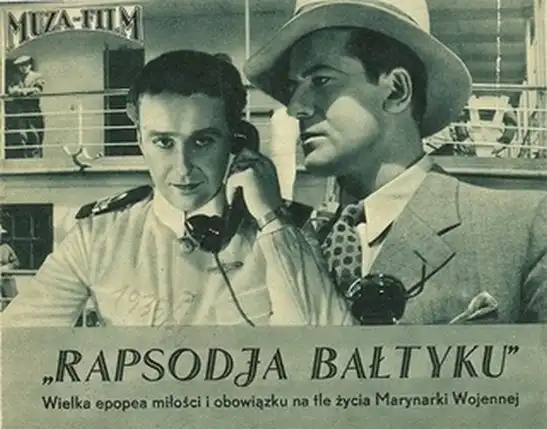
Visualizing the convergence of Leonard Buczkowski's style and the core Romance narrative.
Three friends - Adam, Zygmunt and Jerzy - serve in the seaplane squadron of the Polish Navy in Gdynia. Years ago, Adam Halny fell in love with a young girl, not knowing that she was the fiancée of his friend from officer school, Zygmunt Zatorski. Loyalty then forced him to leave... Years later, they meet again. Ewa is already Zygmunt's wife, but Adam cannot forget her... While flying over the sea during a strong storm, the plane crashes and Adam and Zygmunt are in mortal danger. This dramatic situation not only allows them to survive, but also strengthens their friendship and removes all misunderstandings between them once and for all.
Decades after its release, Rapsodia Baltyku remains a vital piece of the cinematic puzzle. Its influence can be seen in countless modern works, solidifying Leonard Buczkowski's status as a master of the craft in Poland and beyond.