
DbcultAccessing Vault...
Director's Spotlight
Senior Film Conservator
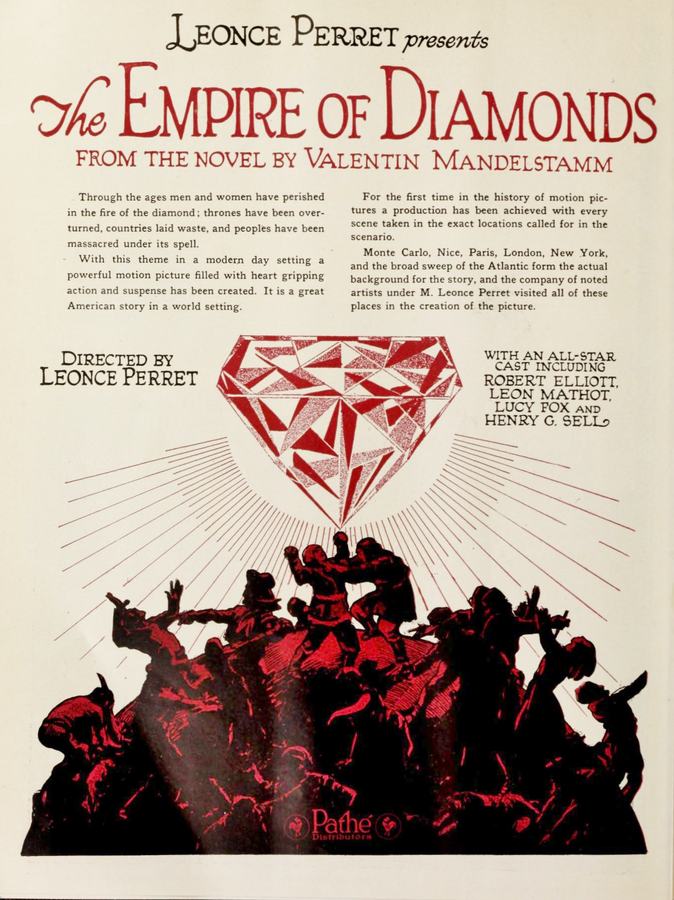
Director's Spotlight: United States
A Deep Dive into the 1920 Vision of Léonce Perret
To understand the modern evolution of United States film, one must first look at The Empire of Diamonds and the collaborative alchemy between Léonce Perret and the 1920 creative team. Subverting the expectations of the typical 1920 audience, it remains a vital reference point for anyone studying the evolution of Léonce Perret.
In The Empire of Diamonds, Léonce Perret pushes the boundaries of conventional narrative. The film's unique approach to its subject matter has sparked endless debates and interpretations among cinephiles and critics alike.
While deeply rooted in United States, The Empire of Diamonds has achieved a global reach, influencing directors from various backgrounds. Its ability to translate cult tropes into a universal cinematic language is why it remains a cult staple decades after its 1920 release.
| Cinematography | Deep Focus |
| Soundtrack | Experimental |
| Editing | Elliptical |
| Art Direction | Expressionist |
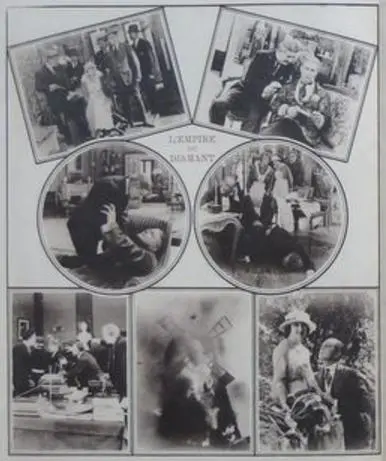
Visualizing the convergence of Léonce Perret's style and the core cult narrative.
Matthew Versigny, the head of an American diamond concern, travels abroad with his sister Marguerite to learn the source of some imitation stones which are so perfect that even his company has purchased them. In Paris, they join forces with Paul Bernac, a special agent of the French Secret Service, and Andre Zarnoff, the chemist who invented the formula for the fake stones. The trail brings them into contact with Arthur Graves, the master mind of the counterfeiting ring, who determines to eliminate Versigny. After kidnapping his adversary, Graves employs the Baron de Lambri, Versigny's former manager, to steal the secret formula from Versigny's safe, thus making it appear as if Versigny had decamped with his company's papers. Versigny finally escapes and, with the aid of Bernac and Marguerite, tracks Graves down and captures the villains.
Decades after its release, The Empire of Diamonds remains a vital piece of the cinematic puzzle. Its influence can be seen in countless modern works, solidifying Léonce Perret's status as a master of the craft in United States and beyond.