
DbcultAccessing Vault...
Director's Spotlight
Senior Film Conservator
Director's Spotlight: United States
A Deep Dive into the 1919 Vision of Léonce Perret
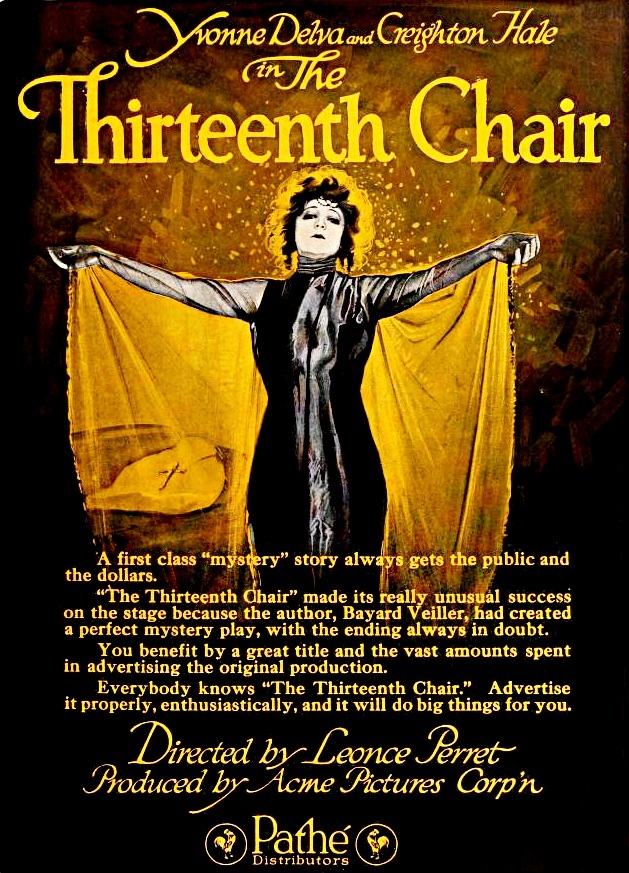
The 1919 release of The Thirteenth Chair marked a significant moment for the enduring legacy of Léonce Perret's artistic contribution to the genre. By challenging the status quo of 1919 cinema, it has cemented its place in the global cult cinema archive.
In The Thirteenth Chair, Léonce Perret pushes the boundaries of conventional narrative. The film's unique approach to its subject matter has sparked endless debates and interpretations among cinephiles and critics alike.
| Cinematography | Handheld |
| Soundtrack | Diegetic |
| Editing | Rhythmic |
| Art Direction | Naturalist |
Visualizing the convergence of Léonce Perret's style and the core cult narrative.
Mrs. Philip Mason commits suicide after she has an affair with Stephen Lee, a disreputable stockbroker, and sells her husband's securities so that Lee can buy stocks. When Lee goes bankrupt, he blackmails Helen Trent by threatening to reveal silly love letters she wrote to him before she married. Her brother, Willy Grosby, and his fiancée, Helen O'Neil, who lives with the Grosbys, go to retrieve the letters. While Willy waits outside, Lee is knifed to death as he attacks Helen. Lee's friend, Edward Wales, attempts to pin the murder on Helen by having Madame LaFarge, a clairvoyant, conduct a séance. In the darkened room, Wales, through whom Lee's spirit supposedly speaks, is about to name Helen as the murderer, but Wales, who sits in the thirteenth chair, is himself murdered. After Helen confesses to Inspector Donohue that Madame LaFarge is her mother, LaFarge, while conducting another séance, tricks Philip Mason into confessing to the murders.
Decades after its release, The Thirteenth Chair remains a vital piece of the cinematic puzzle. Its influence can be seen in countless modern works, solidifying Léonce Perret's status as a master of the craft in United States and beyond.