
DbcultAccessing Vault...
Director's Spotlight
Senior Film Conservator
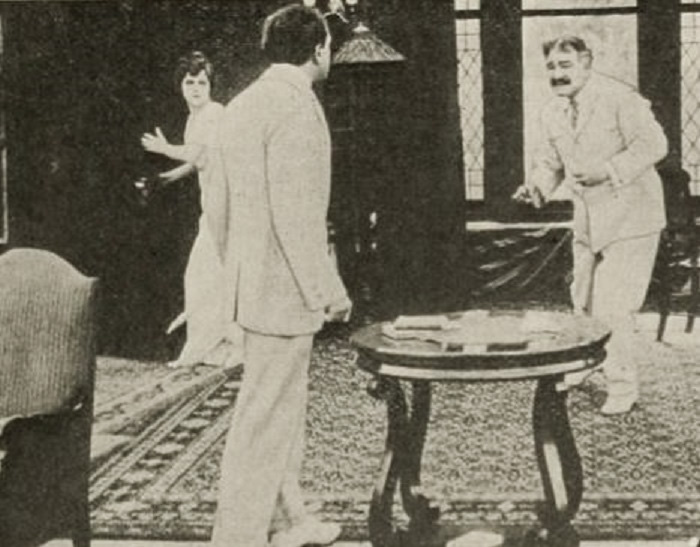
Director's Spotlight: United States
A Deep Dive into the 1914 Vision of Leopold Wharton
When we examine the cinematic landscape of United States, A Prince of India emerges as a landmark work of the enduring legacy of Leopold Wharton's artistic contribution to the genre. Through a lens of existential fatalism and cult tropes, it captures a specific kind of cinematic magic that is rarely replicated.
In A Prince of India, Leopold Wharton pushes the boundaries of conventional narrative. The film's unique approach to its subject matter has sparked endless debates and interpretations among cinephiles and critics alike.
To fully appreciate A Prince of India, one must consider the cinematic climate of 1914. During this period, United States was undergoing significant artistic shifts, and Leopold Wharton was at the forefront of this cult movement, often challenging established norms.
| Cinematography | Deep Focus |
| Soundtrack | Experimental |
| Editing | Elliptical |
| Art Direction | Expressionist |
Visualizing the convergence of Leopold Wharton's style and the core cult narrative.
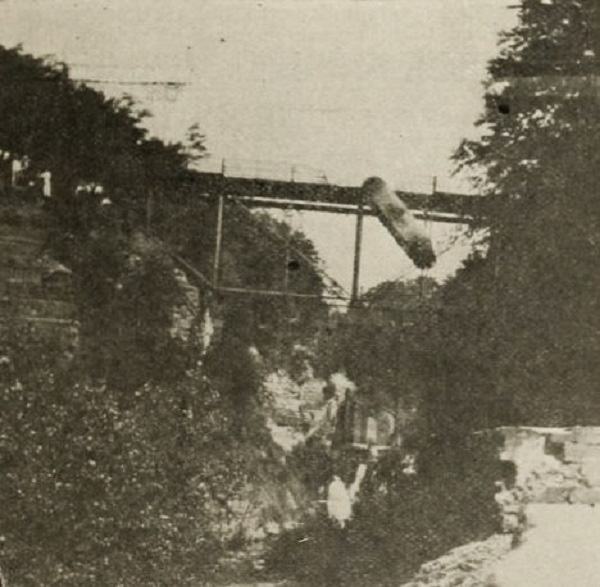
An Indian rajah determines to give the prince, his son, the advantages of an American university education, and brings him to the United States. Arriving at the university town they stop at the hotel there and are immediately besieged by the reporters who scent a good story, especially as it is reported that the rajah brings with him one of the famous jewels of the world, a magnificent diamond. Among the reporters is a young man on his first assignment who at once makes friends with the prince. In the meantime Nell Reardon, the "badger queen," is approached by Moreland, a "gentleman" crook, and threatened with exposure if she does not aid him to obtain possession of the rajah's jewel. She promises her aid and as a first step registers at the same hotel as the rajah, under the alias of the "Countess Mirska." Billy is assigned to interview her. The prince is struck with the woman's charms and persuades Billy to introduce him. At the instigation of Moreland. the woman persuades the prince to show her the diamond. Fearing his father's displeasure the young man secretly takes the jewel from the strong box. Seeing their opportunity, Moreland and Harley, his "pal," invite the prince to have some refreshments at the hotel café and the prince asks to have Billy included in the party. The jewel is passed around and admired. By accident, and while no one is looking, it falls from the case and lodges in the cuff of the reporter's trousers. Later, while in his own room, he discovers it and immediately runs back to the hotel to return it to the prince. Unable to find him, he decides to stay at the hotel for the night, takes a room and throws himself upon the bed, fully clothed. The anxiety of his responsibility preys upon his mind so that his slumbers are disturbed and his rest is a nightmare. In the meantime the prince discovers the loss, tells the crooks of it and they search the café together. The crooks secretly believe each other guilty, but when they tax one another with the crime they mutually prove their innocence. Without saying anything to each other they visit the reporter's home and search his room. Finding one another in the room their mutual distrust deepens. Billy's distraught mind causes him to talk in his sleep and while doing so he drops the jewel over the hotel balcony. It falls at the feet of the prince, but he does not enjoy its possession long. Harley, who has been spying upon him, knocks him out and escapes with the diamond. The further vicissitudes of the diamond are intensely interesting and lead up to the superb climax where the prince recovers it and sees the baffled crook, Moreland, go over the bridge into the ravine below in the trolley car in which he has tried to escape.
Decades after its release, A Prince of India remains a vital piece of the cinematic puzzle. Its influence can be seen in countless modern works, solidifying Leopold Wharton's status as a master of the craft in United States and beyond.