
DbcultAccessing Vault...
Director's Spotlight
Senior Film Conservator
Director's Spotlight: United States
A Deep Dive into the 1914 Vision of Leopold Wharton
Witnessing the stylistic transformation of cult through The Pawn of Fortune reveals the global recognition that Leopold Wharton garnered after the release of The Pawn of Fortune. Serving as a mirror to the anxieties of a changing world, offering layers of thematic complexity that demand repeated viewing.
In The Pawn of Fortune, Leopold Wharton pushes the boundaries of conventional narrative. The film's unique approach to its subject matter has sparked endless debates and interpretations among cinephiles and critics alike.
In this work, Leopold Wharton explores the intersection of cult and United States cultural identity. The meticulous attention to detail suggests a deep-seated commitment to pushing the boundaries of the medium, ensuring that The Pawn of Fortune remains a relevant topic of study for cult enthusiasts.
| Cinematography | Static |
| Soundtrack | Minimalist |
| Editing | Slow-Burn |
| Art Direction | Brutalist |
Visualizing the convergence of Leopold Wharton's style and the core cult narrative.
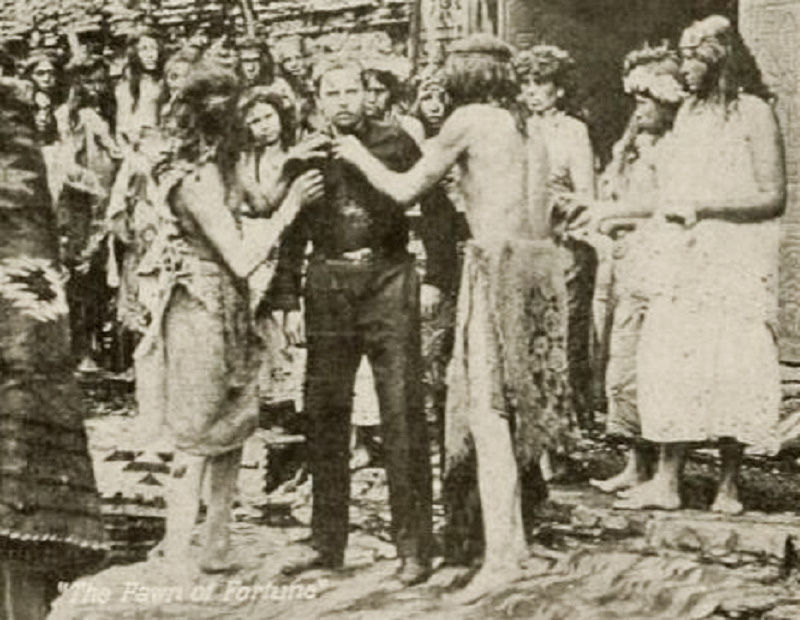
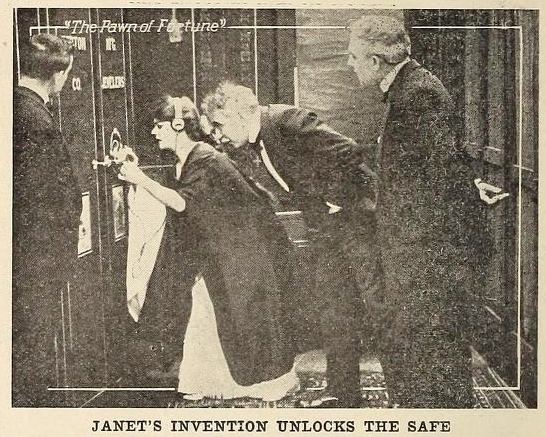
It is an unfortunate day for John Hadley when he protects Doris Jackson from the unwelcome advances of the boss's son, for it results in his discharge. It is doubly unfortunate as Hadley is a married man with an infant daughter, Janet. Not satisfied with discharging Hadley, the vengeful boss succeeds in preventing him from securing other employment. Matters go from bad to worse until at last starvation stares the little family in the face. Driven at last to desperation, Hadley finds himself at the docks where the waters of the swiftly flowing river seems to suggest a way out of his difficulties. Plunging blindly off the end of the pier, he lands in a rowboat which at that moment comes from under the pier. In it are three river pirates who think that Hadley is spying on them. They capture him and take him to a nearby yacht which is owned by J. Harvey Hall, the leader of a band of crooks, who demands that Hadley join them. Upon his refusal, Hadley is set adrift near the South African coast to prevent him from "peaching." He is captured by a band of Mayas on the Santos Islands and is doomed to die. They bedeck him with precious jewels and prepare to offer him up as a living sacrifice to their gods. Watching his chance he makes a break and succeeds in escaping. He attracts the attention of an exploring party and returns to civilization. He realizes a large sum by selling the jewels and institutes a search for his wife and child. By chance he locates his wife in a hospital where she has been taken when found exhausted in the street. His daughter, however, cannot be found, she having been adopted by Hall, who finds her on his doorstep. Eighteen years elapse. Janet has become an inventive genius and perfects a safe opening device. One night, Hall, who has concealed his real identity from her, persuades Janet to try to open a jeweler's safe, pretending that it belongs to a friend. She succeeds in opening it, but the police have been tipped off and raid the office where Hall and his pals are gathered. Hall is killed, but Janet escapes. Grief-stricken by the revelation of Hall's true character, she returns home where she learns that he is not her father. Detective Baggett arrives too late to intercept her. He searches the house and finds a record of Janet's adoption by Hall. Hadley advertises for news of his long-lost daughter. The detective, reading the advertisement, thinks he has a clew in the papers which he found and starts a search for Janet. Baggett picks up her trail, which leads to Hadley's home. Meeting Hadley and his wife outside, they enter and see Janet, who, by a strange coincidence, has taken a position as governess to the Hadley's adopted daughter, in front of the safe endeavoring to open it. As the doors of the safe swing open they rush forward only to see Janet reach in and take out a small kitten which had been locked in by Hadley's adopted daughter. Recognizing the detective, Janet attempts to escape but is held by him. Great is the surprise when he produces the secret papers and proves to the Hadleys that their governess was in reality their long lost daughter.
Decades after its release, The Pawn of Fortune remains a vital piece of the cinematic puzzle. Its influence can be seen in countless modern works, solidifying Leopold Wharton's status as a master of the craft in United States and beyond.