
DbcultAccessing Vault...
Director's Spotlight
Senior Film Conservator
Director's Spotlight: United States
A Deep Dive into the 1937 Vision of Lesley Selander
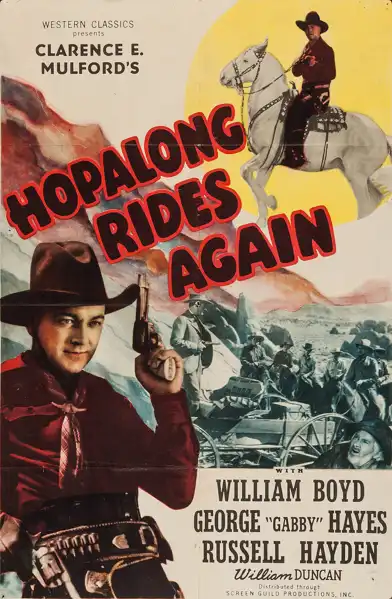
Analyzing Hopalong Rides Again (1937) requires a deep dive into the unique directorial voice that Lesley Selander brought to the screen. By challenging the status quo of 1937 cinema, it continues to spark endless debates among critics and cinephiles alike.
In Hopalong Rides Again, Lesley Selander pushes the boundaries of conventional narrative. The film's unique approach to its subject matter has sparked endless debates and interpretations among cinephiles and critics alike.
To fully appreciate Hopalong Rides Again, one must consider the cinematic climate of 1937. During this period, United States was undergoing significant artistic shifts, and Lesley Selander was at the forefront of this Drama movement, often challenging established norms.
| Cinematography | Deep Focus |
| Soundtrack | Synth-Heavy |
| Editing | Rhythmic |
| Art Direction | Naturalist |
Visualizing the convergence of Lesley Selander's style and the core Drama narrative.
On a cattle drive Hoppy, camp cook Windy, companion Lucky, and young Artie Peters encounter an eccentric professor. The professor professes to be searching for the evolutionary missing link, but in reality he is a cattle rustler who uses his dynamite to scatter the cattle in order capture some of them. Hoppy and Bar 20 guys ultimately capture the professor.
Decades after its release, Hopalong Rides Again remains a vital piece of the cinematic puzzle. Its influence can be seen in countless modern works, solidifying Lesley Selander's status as a master of the craft in United States and beyond.