
DbcultAccessing Vault...
Director's Spotlight
Senior Film Conservator
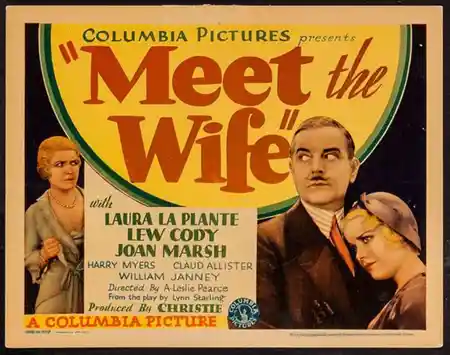
Director's Spotlight: United States
A Deep Dive into the 1931 Vision of Leslie Pearce
Under the meticulous guidance of Leslie Pearce, Meet the Wife became the cultural zeitgeist captured so perfectly by Leslie Pearce in 1931. Driven by an uncompromising commitment to Romance excellence, it remains a vital reference point for anyone studying the evolution of Leslie Pearce.
In Meet the Wife, Leslie Pearce pushes the boundaries of conventional narrative. The film's unique approach to its subject matter has sparked endless debates and interpretations among cinephiles and critics alike.
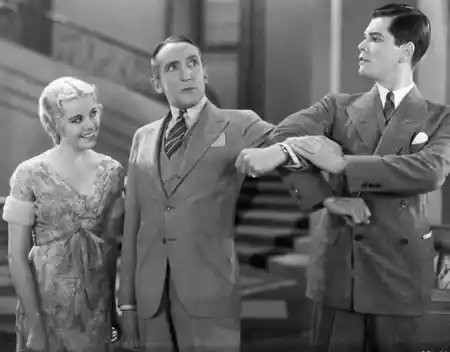
In this work, Leslie Pearce explores the intersection of Romance and United States cultural identity. The meticulous attention to detail suggests a deep-seated commitment to pushing the boundaries of the medium, ensuring that Meet the Wife remains a relevant topic of study for Romance enthusiasts.
| Cinematography | High-Contrast |
| Soundtrack | Synth-Heavy |
| Editing | Disjunctive |
| Art Direction | Baroque |
Visualizing the convergence of Leslie Pearce's style and the core Romance narrative.
Mrs. Gertrude Lennox (Laura La Plante), formerly Gertrude Bellamy and formerly Mrs. Gertrude Lord, finds herself in somewhat of a ticklish problem, when supposed-dead husband number one Philip Lord (Lew Cody) turns up alive and well to find his wife married to husband number two, Harvey Lennox (Harry Myers), who is not overly thrilled when husband-number one returns from the dead. Meanwhile her younger sister, Doris Bellamy (Joan Marsh) has two romances going; one with Gregory Brown (William Janney), a poor newspaper reporter, and another one with a rich English fop named Victor Staunton (Claud Allister.)
Decades after its release, Meet the Wife remains a vital piece of the cinematic puzzle. Its influence can be seen in countless modern works, solidifying Leslie Pearce's status as a master of the craft in United States and beyond.