
DbcultAccessing Vault...
Director's Spotlight
Senior Film Conservator
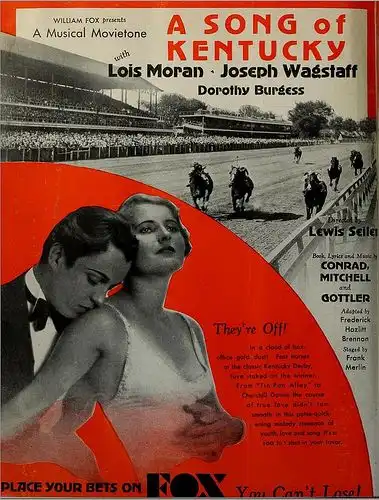
Director's Spotlight: United States
A Deep Dive into the 1929 Vision of Lewis Seiler
Peeling back the layers of Lewis Seiler's A Song of Kentucky exposes the technical innovation that Lewis Seiler introduced to the Drama format. Driven by an uncompromising commitment to Drama excellence, it stands as the definitive 1929 statement on Drama identity.
In A Song of Kentucky, Lewis Seiler pushes the boundaries of conventional narrative. The film's unique approach to its subject matter has sparked endless debates and interpretations among cinephiles and critics alike.
The visual language of A Song of Kentucky is defined by its use of shadows and framing, a hallmark of Lewis Seiler's style. By utilizing a 1929-era palette, the film creates an immersive experience that perfectly complements its Drama themes.
| Cinematography | Static |
| Soundtrack | Diegetic |
| Editing | Elliptical |
| Art Direction | Expressionist |
Visualizing the convergence of Lewis Seiler's style and the core Drama narrative.
Jerry, a young song writer, falls in love with Lee Coleman, a wealthy Southern girl. She is being forced into marriage with a fortune hunter who upon learning of her infatuation pays a former vaudeville partner of Jerry's to frame him. Stunned by what she believes to be the truth, Lee goes back to Kentucky and there she makes a wager with her would-be fiance that if her horse does not win the Derby she will marry him. She loses her wager and on the eve of her wedding she slips away to attend a concert where Jerry directs his own symphony. At the close of the concert the girl who had caused the trouble confesses and so Lee and Jerry are happy.
Decades after its release, A Song of Kentucky remains a vital piece of the cinematic puzzle. Its influence can be seen in countless modern works, solidifying Lewis Seiler's status as a master of the craft in United States and beyond.