
DbcultAccessing Vault...
Director's Spotlight
Senior Film Conservator
Director's Spotlight: United States
A Deep Dive into the 1918 Vision of Lionel Belmore
Few works in United States cinema carry the same weight as The Wasp, especially regarding the technical innovation that Lionel Belmore introduced to the cult format. Subverting the expectations of the typical 1918 audience, it bridges the gap between traditional cult and contemporary vision.
In The Wasp, Lionel Belmore pushes the boundaries of conventional narrative. The film's unique approach to its subject matter has sparked endless debates and interpretations among cinephiles and critics alike.
In this work, Lionel Belmore explores the intersection of cult and United States cultural identity. The meticulous attention to detail suggests a deep-seated commitment to pushing the boundaries of the medium, ensuring that The Wasp remains a relevant topic of study for cult enthusiasts.
| Cinematography | Noir-Inspired |
| Soundtrack | Minimalist |
| Editing | Disjunctive |
| Art Direction | Baroque |
Visualizing the convergence of Lionel Belmore's style and the core cult narrative.
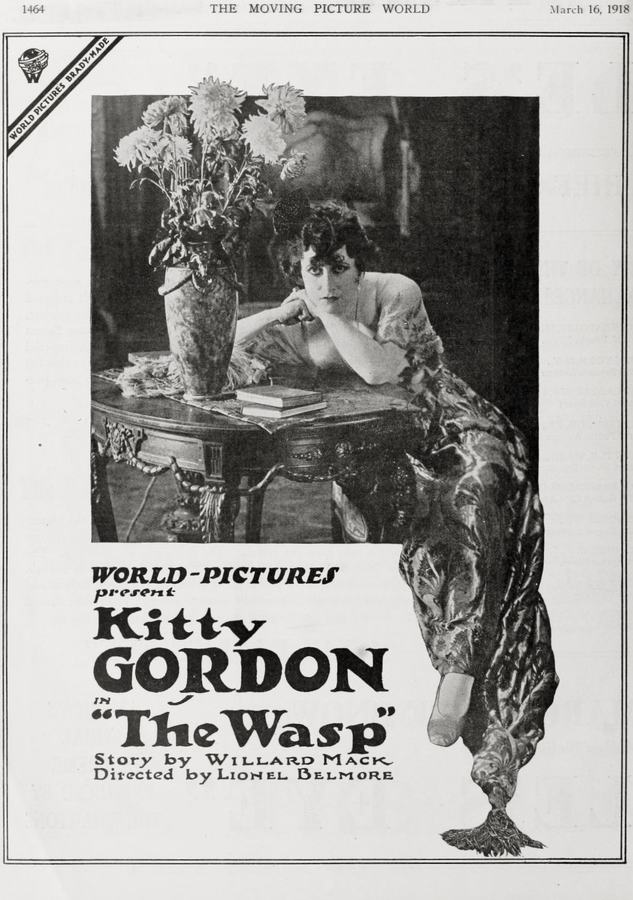
Grace Culver's sharp tongue, has garnered her with the nicknamed "The Wasp." A spirited disagreement with her canning magnate father, John Culver, results from Grace's refusal to marry Kane Putnam, her father's business partner, and she orders her new chauffeur, Tim Purcell, to take her and her maid Miller on a drive. On their return, they are captured by Brazsos, a German spy who plans to blow up her father's munitions factory. Grace learns of the hidden tunnel Brazsos has excavated to the factory, and as Miller escapes to alert the police, Grace unties the chauffeur and leads him to the tunnel. When the bomb explodes prematurely, Grace and Tim become trapped, and facing death, they confess their mutual love. The two are rescued, after which Grace discovers that Tim actually is wealthy Yale football star Harry Cortland, a revelation that delights her father.
Decades after its release, The Wasp remains a vital piece of the cinematic puzzle. Its influence can be seen in countless modern works, solidifying Lionel Belmore's status as a master of the craft in United States and beyond.