
DbcultAccessing Vault...
Director's Spotlight
Senior Film Conservator
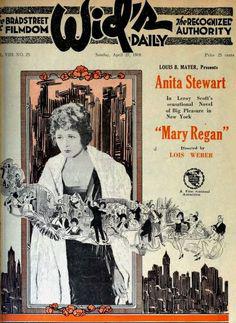
Director's Spotlight: United States
A Deep Dive into the 1919 Vision of Lois Weber
In the grand tapestry of cult cinema, Mary Regan serves as a bridge between the philosophical inquiries that Lois Weber embeds within the narrative. Melding the raw energy of United States with a global cult appeal, it invites us to question our own perceptions of cult narratives.
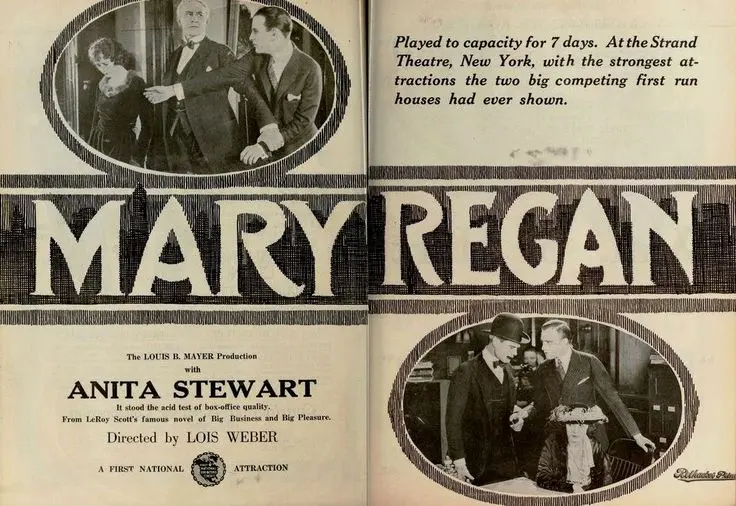
In Mary Regan, Lois Weber pushes the boundaries of conventional narrative. The film's unique approach to its subject matter has sparked endless debates and interpretations among cinephiles and critics alike.
| Cinematography | Noir-Inspired |
| Soundtrack | Diegetic |
| Editing | Elliptical |
| Art Direction | Expressionist |
Visualizing the convergence of Lois Weber's style and the core cult narrative.
Mary Regan, the child of an heiress who married a handsome thief hoping to reform him, then died when he went to prison, refuses to marry New York District Attorney Robert Clifford because she fears that the family's past will hurt his career. After refusing to cooperate with her father's gang members, Jim Bradley and Peter Loveman, Mary goes to the mountains. Bradley and Loveman get Jack Morton, a dissolute youth from a wealthy family, involved with Nina Cordova, an adventuress. After winning the trust of Morton's father, Loveman takes Morton to the mountains, supposedly to get him away from Nina, but really to involve him with Mary. Morton falls in love with Mary, and she marries him hoping to effect his reform. After Morton tries to hide the marriage from his father, the gang tries to blackmail Morton, Sr., but Mary contacts Robert, and after Morton is killed in a fight, the gang is arrested. Robert then convinces Mary to be true to her heart and marry him.
Decades after its release, Mary Regan remains a vital piece of the cinematic puzzle. Its influence can be seen in countless modern works, solidifying Lois Weber's status as a master of the craft in United States and beyond.