
DbcultAccessing Vault...
Director's Spotlight
Senior Film Conservator
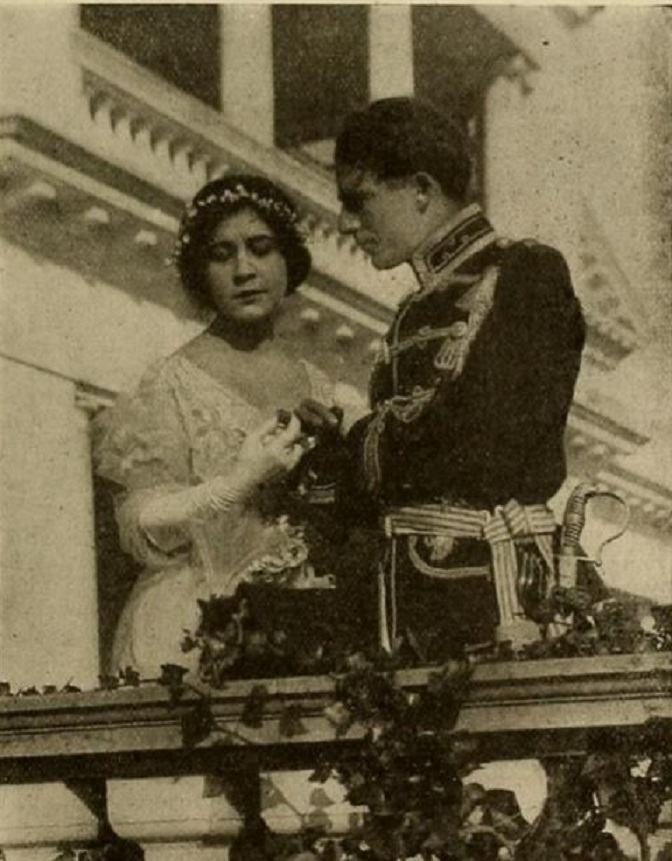
Director's Spotlight: United States
A Deep Dive into the 1914 Vision of Lorimer Johnston
The evocative power of The Envoy Extraordinary stems from the unique collaboration between the bold experimentation that has become synonymous with Lorimer Johnston. Framed by the hauntingly beautiful landscapes of the production, it echoes the profound changes occurring in United States during that era.
In The Envoy Extraordinary, Lorimer Johnston pushes the boundaries of conventional narrative. The film's unique approach to its subject matter has sparked endless debates and interpretations among cinephiles and critics alike.
The visual language of The Envoy Extraordinary is defined by its use of shadows and framing, a hallmark of Lorimer Johnston's style. By utilizing a 1914-era palette, the film creates an immersive experience that perfectly complements its cult themes.
| Cinematography | Noir-Inspired |
| Soundtrack | Orchestral |
| Editing | Slow-Burn |
| Art Direction | Brutalist |
Visualizing the convergence of Lorimer Johnston's style and the core cult narrative.
The Countess of Northstone, wife of the Prime Minister of a great power, gives a lawn party at her country home. Among her guests is an ambassador whose government is suspected of plotting a war against the country to which he is accredited. The prime Minister asks his wife to obtain as much information as she can from the ambassador, who is in love with her. She plays with him and, as he is fully convinced that he has conquered her, his secretary brings him a note. Lady Sibil plays with him pretending the note is from a woman. To vindicate himself he shows her the letter: "Meet me at the Carlton Club tonight. Important information," the note is signed, von Hatzfeldt. The Countess knows this man as the leader of a party called "The Brotherhood," which was formed for anarchistic purposes. Leaving the Ambassador she at once seeks Captain Balfour, secretary to the Prime Minister and asks him to play the spy, "In the interests of your country." He goes to the club and obtains positive proof that the Ambassador has been bought with the crime money of the "Brotherhood" represented by Baron von Hatzfeldt. The Foreign Ambassadors are received by the Prime Minister that evening at his official residence. While the reception is in progress a note arrives from the continent: "Declaration of war is imminent unless strategic diplomacy is used. Send special envoy with full power to act at once." Salston, who is the representative on the continent of the Great Power, is in fact its Ambassador. That night at the reception Baron von Hatzfeldt is confronted with the proofs of his treachery and the Countess exposes him to the people and tells what he was ten years before. We see him as a leader of a detachment of soldiers invading a peaceful country and shooting down unarmed and defenseless peasants, and also see him murdering the brother of the countess as he lies asleep in his bed. At the end of the story the wife of the Baron enters, and sorrow for her makes the Prime Minister relax his decision of punishment and he permits them to go with the understanding that they leave the country at once. This they agree to do. Balfour is to be sent as an Envoy Extraordinary to the foreign power and is to use his best efforts to avert the threatened declaration of war. As he is leaving his apartments he is attacked by the Baron and the Ambassador, assisted by their hirelings. They think he has information about him as to the purport of his mission and attempt to rob him. Fortunately his instructions are verbal, so they accomplish nothing. In revenge they place him on a steamer and put to sea. intending to rid themselves of him at the first chance. He is disabled but gradually his reason and his strength return and when attacked by the crew he gives a good account of himself. He is overpowered at last and made to walk the plank into the sea. Thinking Balfour is dead they return to port, but blindfolded and with hands and feet tied, he manages to reach the shore and is revived by some fishermen. He again starts on his mission. A wonderful scene in the palace of the Emperor is shown; the Emperor is surrounded by his chief officers and civilian advisers and announces amid great enthusiasm that war against the world is declared. Fighting his way to the Emperor the Envoy Extraordinary reaches the council room as the Emperor is signing the document. Seizing it he tears it to pieces and in the scene which ensues he convinces the Emperor and his advisers that it is better not to fight. To this they readily agree when shown the reason. Balfour returns to his own country and, as both the Baron and the Ambassador demand "satisfaction," they get it, but in a way that can hardly be called pleasing to them. The Baron is beaten at the game he himself invites. In the duel with the Ambassador, it is very evident that the Ambassador will hardly serve his country again. Balfour receives the thanks of his country and all ends as wars should end, with satisfaction and peace on all sides.
Decades after its release, The Envoy Extraordinary remains a vital piece of the cinematic puzzle. Its influence can be seen in countless modern works, solidifying Lorimer Johnston's status as a master of the craft in United States and beyond.