
DbcultAccessing Vault...
Director's Spotlight
Senior Film Conservator
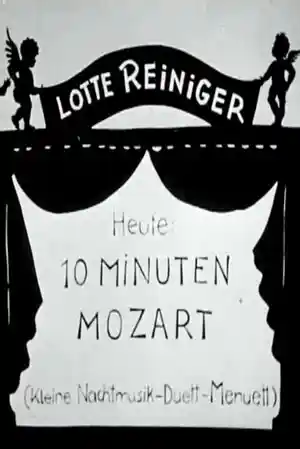
Director's Spotlight: Germany
A Deep Dive into the 1930 Vision of Lotte Reiniger
Analyzing Zehn Minuten Mozart (1930) requires a deep dive into the unique directorial voice that Lotte Reiniger brought to the screen. By challenging the status quo of 1930 cinema, it continues to spark endless debates among critics and cinephiles alike.
In Zehn Minuten Mozart, Lotte Reiniger pushes the boundaries of conventional narrative. The film's unique approach to its subject matter has sparked endless debates and interpretations among cinephiles and critics alike.
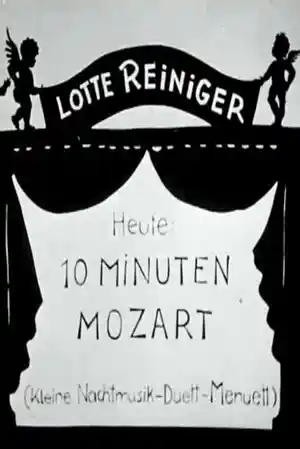
To fully appreciate Zehn Minuten Mozart, one must consider the cinematic climate of 1930. During this period, Germany was undergoing significant artistic shifts, and Lotte Reiniger was at the forefront of this Short movement, often challenging established norms.
| Cinematography | Static |
| Soundtrack | Orchestral |
| Editing | Slow-Burn |
| Art Direction | Brutalist |
Visualizing the convergence of Lotte Reiniger's style and the core Short narrative.
The animation begins with the first movement of Eine kleine Nachtmusik. The first shot opens with a clown, soon to join a revelling troup of 'Viennese' partygoers that are gathering in a nearby building for a soirée. Following them is a young man who tries to steal the affections of a maid from her 'fiancée' before she enters. The next scene is indoors for the dance, accompanied by the third movement of Eine kleine Nachtmusik. The young man spies the young girl, alone and unhappy surrounded by the gaiety, through the glass. He acquires the costume of a passing pleasure seeker, and joins the affair. The girl has now moved to the garden; the young man, still in disguise, presents himself to her, accompanied by the second movement of Eine kleine Nachtmusik. He begins to speak to her, while kneeling, to the duet 'Il core vi dono' ('I give you my heart') from Così Fan Tutte. At the conclusion of the duet his identity is brought to light and the two entwine. At last, they return to the dance, accompanied by a minuet (Divertimento in D, K.334).
Decades after its release, Zehn Minuten Mozart remains a vital piece of the cinematic puzzle. Its influence can be seen in countless modern works, solidifying Lotte Reiniger's status as a master of the craft in Germany and beyond.